SDG 5 In Number
Number of women starting a degree
6.489
Number of first-generation women starting a degree
4.113
Number of students starting a degree
9.032
Number of first-generation students starting a degree
6.205
Number of students
27.604
Number of employees
3.760
Number of academic staff
1.950
Number of senior academic staff
685
Number of female senior academic staff
303
Number of graduates by subject area (STEM, Medicine, Arts & Humanities / Social Sciences): Total
6.192
Number of graduates: STEM
1.905
Number of graduates: Medicine
627
Number of graduates: Arts & Humanities / Social Sciences
3.660
Number of female graduates by subject area (STEM, Medicine, Arts & Humanities / Social Sciences): Total
4.353
Number of female graduates: STEM
1.244
Number of female graduates: Medicine
301
Number of female graduates: Arts & Humanities / Social Sciences
2.808
Number of graduates: Total
6.192
5.3.4 Women’s Application in Underrepresented Subjects
Encouraging Women’s Participation in Underrepresented Fields
As part of its commitment to SDG 5, Universitas Sebelas Maret (UNS) continues to encourage greater participation of women in fields of study that are still dominated by men through various university outreach activities and educational campaigns. These initiatives aim to build women’s confidence in applying for and pursuing careers in disciplines with low representation, such as engineering, agriculture, and information technology. Through collaboration across faculties, internal institutions, and community engagement, UNS strives to create a safe, inclusive, and gender-responsive learning environment free from stereotypes
16 Days of Activism Campaign: Building a Safe and Inclusive Campus
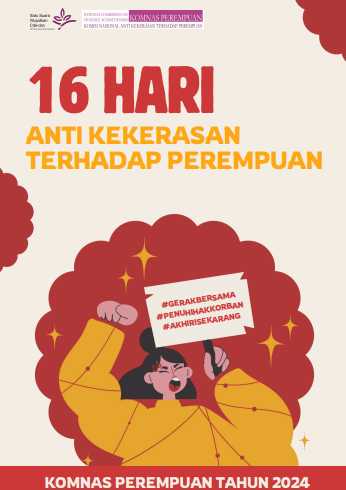
The 16 Days of Activism Against Gender-Based Violence campaign was organized by the UNS Task Force for the Prevention and Handling of Sexual Violence (PPKS) on 4–10 December 2024 through an inter-faculty roadshow titled “Together We Guard for a Safe Campus from Violence.” The roadshow covered various faculties, including Engineering, Agriculture, Mathematics and Natural Sciences, Economics and Business, and Vocational School. The sessions included the dissemination of the Ministry of Education Regulation No. 55 of 2024, case discussions, and calls to foster a culture of mutual respect within the campus community.
This activity represents a tangible form of university outreach designed to encourage women to apply for and participate in academic disciplines where their representation remains low. Through educational and preventive approaches, UNS aims to establish a safe and non-discriminatory academic environment, especially in fields such as engineering, agriculture, and information technology. The campaign also forms part of the national 16 Days of Activism Against Gender-Based Violence movement implemented across educational institutions and community groups in Indonesia, strengthening UNS’s collaboration with government bodies and civil society networks to advance gender equality in higher education.
This initiative demonstrates UNS’s strong commitment to building an inclusive and equitable academic culture while empowering women to pursue their interests and potential without being limited by social stereotypes. It also reinforces the university’s active role in preventing gender-based violence and in motivating women to take part in academic programs traditionally dominated by men through inter-faculty outreach efforts.
Source : https://satgasppk.uns.ac.id/agenda/?utm_source=chatgpt.com
Podcast “Being an Achieving Woman in Engineering? Why Not!”
The Center for Population and Gender Research (PPKG) UNS continues to promote gender equality within the academic community through educational media such as podcasts. In its third episode, “Being an Achieving Woman in Engineering? Why Not!”, the podcast highlights the real-life experiences of women in engineering—one of the fields where women are still underrepresented.
The episode features Diefa Nasywa, a 2022 student of Mechanical Engineering Education, who shares her personal journey and challenges as a woman in a male-dominated STEM environment. “Women must be confident and believe that we are equal to men. Never stop learning and keep proving that we can also excel in engineering,” she said. Her story shows that women can achieve and contribute significantly when supported by an inclusive and gender-sensitive environment.
This initiative is part of the university’s outreach efforts to encourage women to pursue STEM fields and challenge the stereotype that engineering is a male-dominated field. By presenting a relatable role model from within the student community, UNS aims to inspire young women to take part in disciplines where female participation remains limited. The program also supports national efforts to promote gender equality in higher education through collaboration with stakeholders and communities focused on women’s empowerment in STEM.
Through creative public communication such as podcasts, UNS reaffirms its commitment to SDG 5 by fostering an inclusive learning environment free from gender stereotypes.
Conclusion
Through a combination of cross-faculty campaigns and creative outreach media, UNS consistently strengthens an equitable educational ecosystem and promotes the active participation of women in underrepresented fields of study. These initiatives reflect the university’s firm commitment to creating a safe, inclusive, and empowering space for all students—an important step toward achieving equal opportunities in higher education.
In 2024, the UNS provided research and community service funding focused on achieving SDG 5: Achieve gender equality and empower all women and girls. For example, several UNS researchers conducted studies and community service related to gender, including a research by Dr. Siti Khoiriyah, S.Si, M.Si. – “Empowerment of Aisyiyah Women Community in Jaten Subdistrict to Build Family Resilience and Face Climate Change”, which encourages women’s participation in certain fields through community empowerment programs and collaboration with local government, supporting applications by women in underrepresented areas.