Environmental Sustainability Training at UNS
Universitas Sebelas Maret (UNS) demonstrates a strong commitment to environmental sustainability through structured training and capacity-building programs. These initiatives aim to enhance the knowledge, awareness, and technical competencies of both students and staff, enabling them to address environmental challenges and support sustainable development.
UNS believes that sustainability is not only theoretical knowledge but also requires practical skills. Therefore, the university provides dedicated training programs that focus on the environmental aspects of sustainability, implemented continuously and systematically.
Certified Environmental Training: Basic AMDAL Training and AMDAL Preparation Training Program
Universitas Sebelas Maret (UNS), through the Center for Environmental Studies (PPLH LPPM UNS), provides two complementary certified training programs on environmental sustainability:
- Basic AMDAL (Environmental Impact Assessment) Training
This program is designed to provide fundamental knowledge and core competencies in environmental impact assessment. It introduces participants to key concepts, methodologies, and regulatory frameworks related to environmental sustainability. - AMDAL (Environmental Impact Assessment) Preparation Training
This advanced-level training focuses on the practical preparation of AMDAL documents. It equips participants with technical skills to develop Environmental Impact Assessment reports, including Environmental Management Plans and Environmental Monitoring Plans.
Both programs are certified and accredited by the Ministry of Environment and Forestry of the Republic of Indonesia (Decree No. 815/2025) and are delivered through structured, multi-day training formats in both online and offline modes.
Key Competencies Developed
Across both training programs, participants develop competencies in:
- Environmental impact assessment: Understanding the physical and biological consequences of development.
- Environmental risk analysis and mitigation: Identifying potential environmental hazards and creating prevention strategies.
- Environmental management strategies: Designing frameworks for sustainable operations (Environmental Management Plan & Environmental Monitoring Plan).
- Regulations and policies compliance: Ensuring all projects comply with the latest environmental laws and standards.
This training supports the development of professional competencies in environmental sustainability and prepares participants to contribute to environmentally responsible decision-making.
Target Participants
The AMDAL training programs are open to a wide range of participants, including:
- University students
- Academic staff
- Professional staff
- External participants from government, industry, and the community
This inclusive approach ensures that both the internal academic community and external stakeholders can benefit from the training and contribute to broader sustainability practices.
Implementation in 2025
In 2025, UNS conducted multiple batches of both the Basic AMDAL Training and the AMDAL Preparation Training Program as part of its continuous commitment to environmental capacity building.
The program requires a minimum of 10 participants per batch to ensure interactive, high-quality peer learning, reflecting our focus on impactful training outcomes.
The program was delivered in several cohorts (including Batch 91 and Batch 92), each comprising structured sessions, guided learning, and interactive discussions led by certified instructors.
The training was implemented through:
- Synchronous online learning sessions
- Offline/onsite practical sessions
This blended learning approach allows effective knowledge transfer and active participation from diverse participants.
Evidence of Implementation
The following figures show the documentation from both Basic AMDAL Training and AMDAL Preparation Training programs:
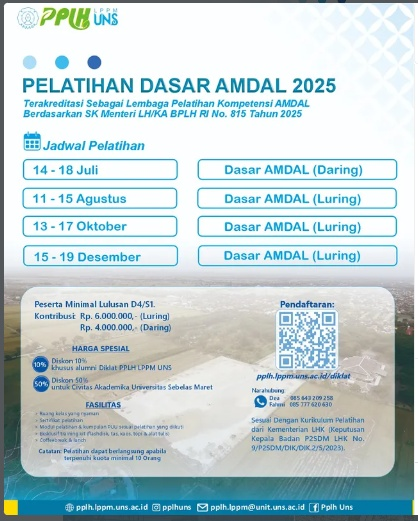
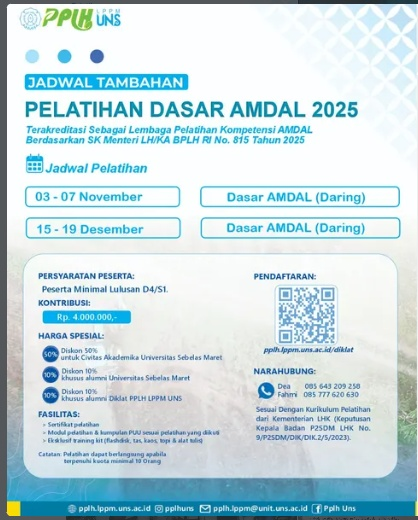
Training schedule of Basic AMDAL Training and AMDAL Preparation Training (multiple batches in 2025)
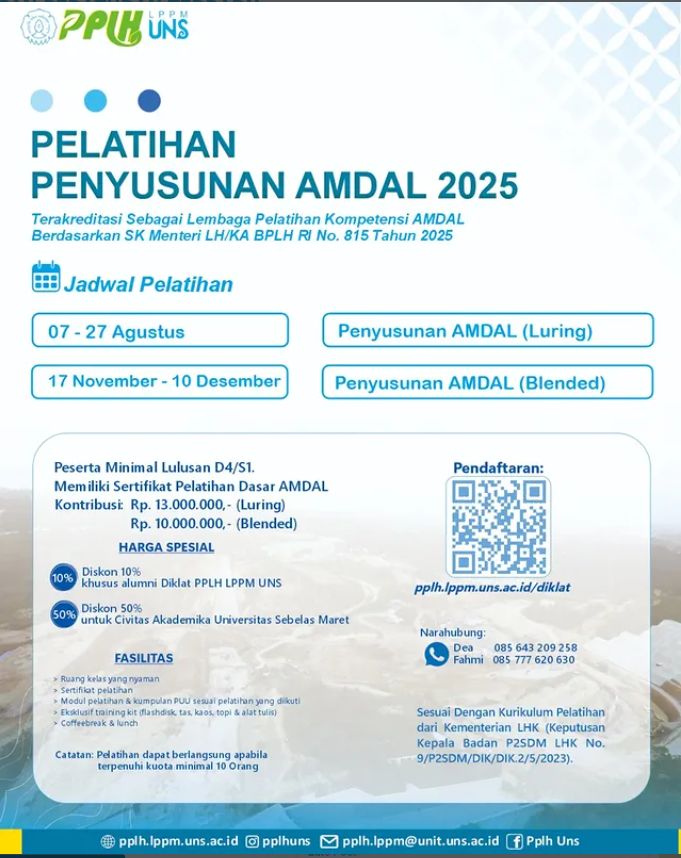
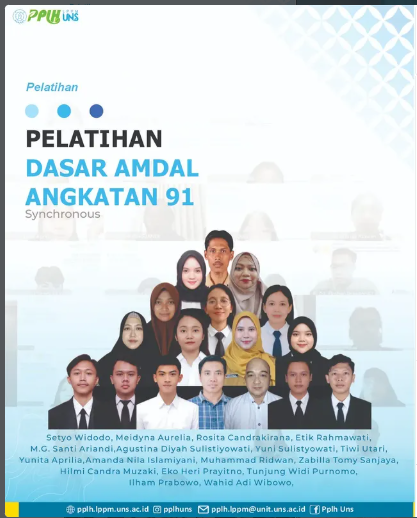
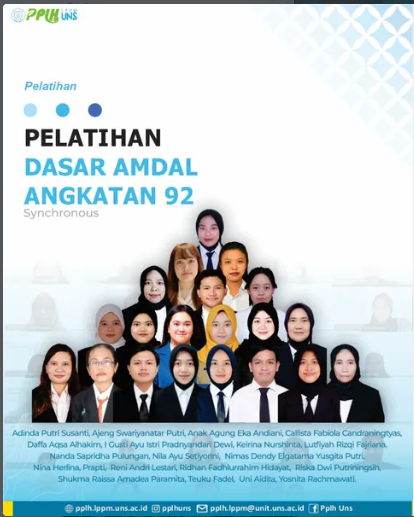
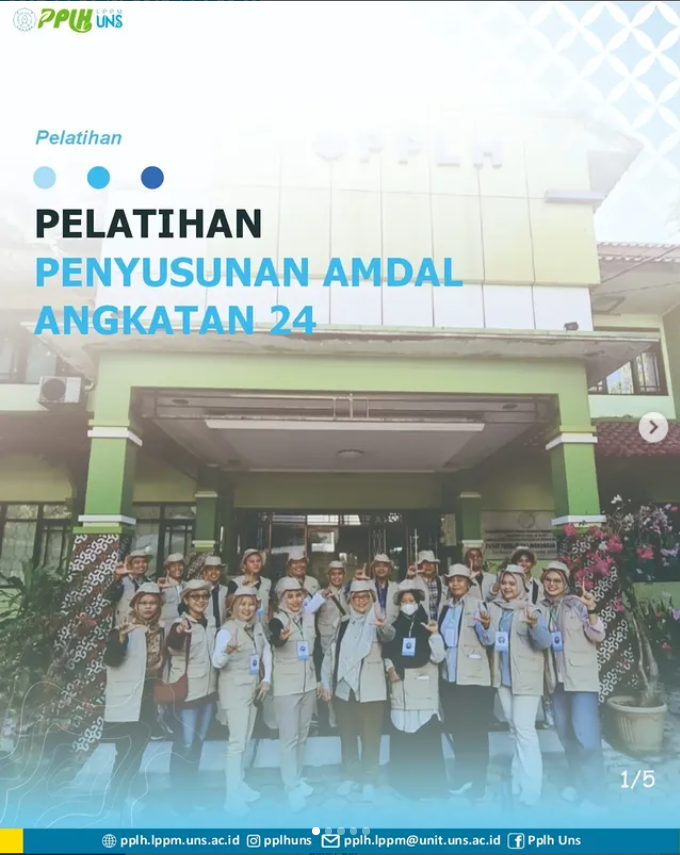
This evidence demonstrates that the program is not only planned but actively implemented with real participants and continuous delivery.
Continuous Institutional Commitment
Both training programs are conducted regularly throughout the year with multiple cohorts, indicating UNS’s strong institutional commitment to environmental sustainability training.
Through this program, UNS actively contributes to strengthening environmental literacy and professional capacity in sustainability practices, both within and beyond the university.
Supporting Environmental Training Activities
In addition to the AMDAL training program, UNS also organizes various supporting activities, such as:
- Seminars on renewable energy and green technology
- Workshops on sustainable development and environmental management
- Awareness programs related to green campus initiatives
These activities complement the structured training by increasing awareness and encouraging sustainable behavior among the academic community.
Conclusion
UNS provides dedicated, structured training on environmental aspects of sustainability through two complementary certified programs: Basic AMDAL Training and AMDAL Preparation Training. These initiatives are implemented continuously, involve both students and staff, and are supported by institutional commitment and national accreditation.
This demonstrates that UNS not only promotes sustainability awareness but also develops the practical competencies required to address environmental challenges in real-world contexts.