

15.3.3 Local Biodiversity Included In Planning and Development
Integration of Local Biodiversity in Campus Planning and Development
Universitas Sebelas Maret (UNS) consistently integrates local biodiversity into its planning and development processes to ensure that every new construction or environmental improvement supports ecosystem sustainability and species conservation.
- Bird Conservatory
One of the key initiatives is the establishment of the Bird Conservatory within the Faculty of Mathematics and Natural Sciences (FMIPA) area, inaugurated by Rector Prof. Dr. Jamal Wiwoho, S.H., M.Hum. on September 29, 2021, in celebration of the faculty’s 25th anniversary. The conservatory serves as a habitat for rare and protected species, such as the Bali Starling (Leucopsar rothschildi), which is protected under Minister of Agriculture Decree No. 421/KPTS/UM/8/1970. The integration of this facility into the campus environment reflects UNS’s commitment to including biodiversity conservation in its infrastructure development and land-use planning.
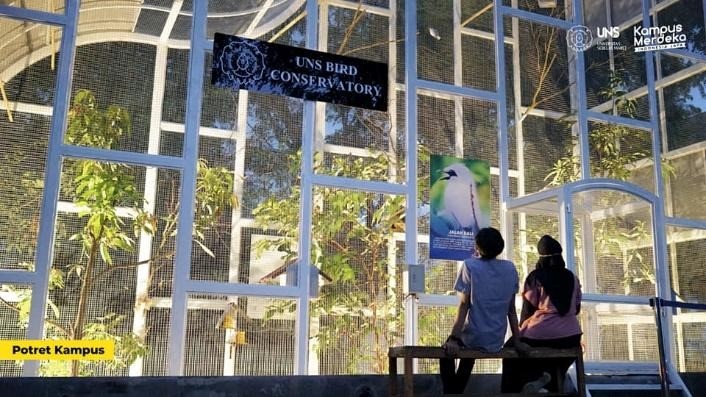
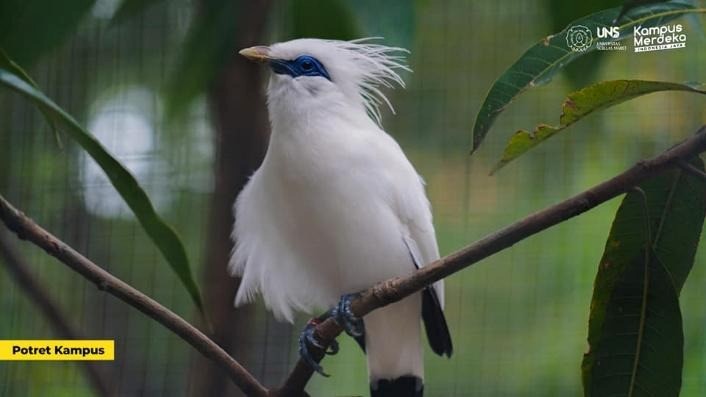
Source: https://mipa.uns.ac.id/rektor-meresmikan-bird-conservatory-yang-diinisiasi-oleh-fakultas-mipa-uns/
- Orchidarium
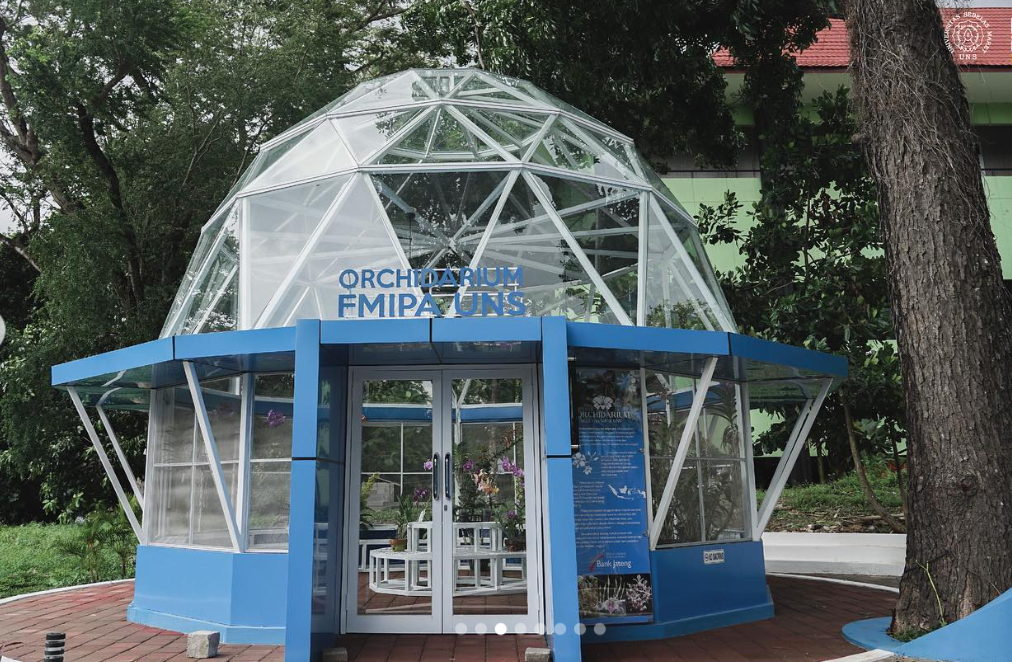
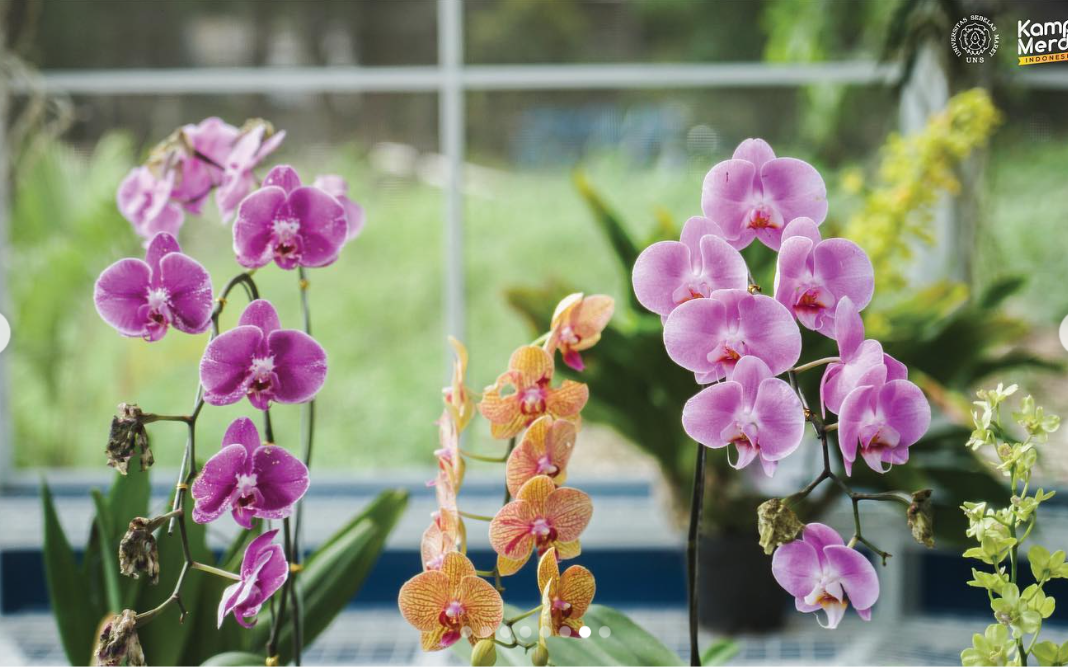
The Orchidarium of the Faculty of Mathematics and Natural Sciences (FMIPA) at Universitas Sebelas Maret (UNS) was established as a conservation and development center for various orchid species, particularly local Indonesian varieties that are increasingly threatened by land conversion and the harvesting of ornamental plants. The facility was inaugurated by the Rector of UNS, Prof. Dr. Jamal Wiwoho, S.H., M.Hum., on September 1, 2022, in conjunction with the 26th anniversary of FMIPA. The Orchidarium serves not only as a sanctuary but also as a center for propagation and hybridization of superior orchids to support sustainable orchid conservation efforts.
The Rector welcomed the establishment of the Orchidarium as a tangible manifestation of UNS’s commitment to biodiversity preservation and the promotion of a green campus environment. The Dean of FMIPA emphasized that the Orchidarium plays a crucial role in the faculty’s strategy to contribute to the conservation of Indonesia’s rare and superior orchid species by leveraging its strong human resource capacity in research and local plant development.
- Herbarium Soloense
The Herbarium Soloense, founded in 1999 and managed by the Department of Biology at FMIPA, contributes to the biodiversity-based planning and development of the campus. With a collection of over 2,500 plant specimens from Mount Lawu and the Surakarta region, including seed plants, ferns, algae, lichens, and fungi, the Herbarium provides essential data for biodiversity research and environmentally informed landscape planning at UNS.
Through these integrated efforts, UNS ensures that local biodiversity is systematically incorporated into every stage of campus planning and development, aligning with its commitment to Sustainable Development Goal (SDG) 15: Life on Land, specifically the indicator “local biodiversity included in planning and development.”