

SDG 13 In Number
Total energy used (GJ)
20.148
Total energy used from low-carbon sources (GJ)
9.308
13.3.3 Co-Operative Planning For Climate Change Disasters
Co-operative Planning for Climate Change Disasters at Local and Regional Levels
Universitas Sebelas Maret (UNS) actively participates in cooperative planning for climate change-related disasters through collaboration with local and regional governments.
- Community Empowerment Program for Flood Disaster Mitigation in Sragen
Universitas Sebelas Maret (UNS), through the Faculty of Agriculture, actively participates in co-operative planning for climate change-related disasters at both the local and regional levels, particularly through the 4th National Seminar on Community Service and CSR in 2024. The event carried the theme “Synergy in Developing Community Participation and Agricultural Downstreaming to Achieve Food Security and Environmental Sustainability”, highlighting the importance of cross-sector collaboration to strengthen community resilience against the impacts of climate change, including flooding.
A concrete example of this collaboration is the Community Empowerment Program for Flood Disaster Mitigation conducted by UNS Student Community Service (KKN) Group 174 in 2024 in Padas Village, Tanon Subdistrict, Sragen Regency. Working closely with local government authorities and community forums, the team carried out village resilience assessments, disaster risk mapping, and public awareness programs. The initiative also established the Disaster Risk Reduction Forum (FPRB) to promote community engagement in disaster preparedness, response, and prevention efforts, reinforcing local co-operative planning for climate-related disasters.
This program contributes to regional resilience building by creating a disaster-resilient village model that can be replicated in other flood-prone areas across Sragen and neighboring regions. Through education, training, and simulation activities for both adults and elementary school children, UNS strengthens local and regional networks for collaborative climate disaster planning, helping communities prepare for potential displacement and adapt more effectively to the growing challenges of climate change.
- Collaborative Establishment of Disaster-Resilient Village (Destana) in Sragen through UNS–BPBD Partnership
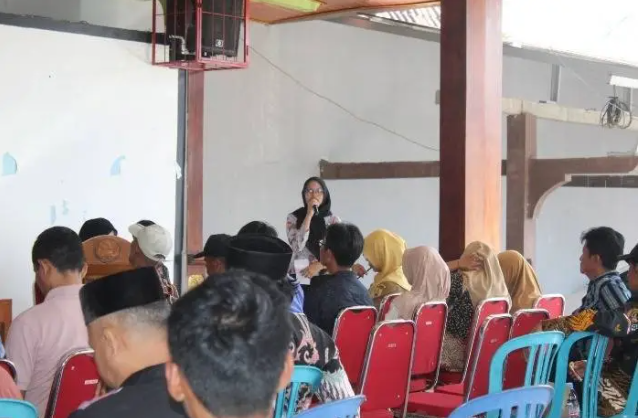
Universitas Sebelas Maret (UNS) demonstrates its strong commitment to co-operative planning for climate change disasters at the local and regional levels through the collaboration between KKN Group 174 and the Regional Disaster Management Agency (BPBD) of Sragen Regency. The joint initiative, conducted under the thematic program “Disaster Mitigation” during the July–August 2024 period, focused on establishing a Disaster-Resilient Village (Desa Tangguh Bencana/Destana) in Padas Village, Tanon Subdistrict, Sragen Regency. This effort involved a series of activities, including community awareness sessions and the formation of the Disaster Risk Reduction Forum (FPRB) to strengthen local preparedness and adaptive capacity to flood risks intensified by climate change.
The public awareness and forum formation sessions, held on July 29, 2024, at Padas Village Hall, brought together local government officials, community leaders, and residents to discuss potential hazards and appropriate mitigation strategies. Supported by BPBD Sragen representative Danang Hermawan and guided by UNS facilitators, the program emphasized the importance of community participation in identifying, assessing, and managing disaster risks. The establishment of FPRB, led collaboratively by UNS students and local partners, serves as a platform for continued disaster preparedness, response coordination, and policy implementation at the local level, contributing to regional resilience-building efforts.
Dr. Sorja Koesuma, the faculty supervisor of KKN 174, highlighted that the FPRB is one of the 20 key parameters in building a Disaster-Resilient Village (Destana), aligning local initiatives with broader regional and national disaster management frameworks. Through this partnership, UNS reaffirms its support for BPBD and the National Disaster Management Agency (BNPB) in fostering sustainable, community-based resilience models. The collaborative approach taken in Padas Village not only enhances flood preparedness but also provides a replicable model for other regions, showcasing how academic institutions can play a central role in cooperative planning for climate change adaptation and disaster mitigation.
- University Collaboration in the 2024 National Disaster Risk Reduction Month
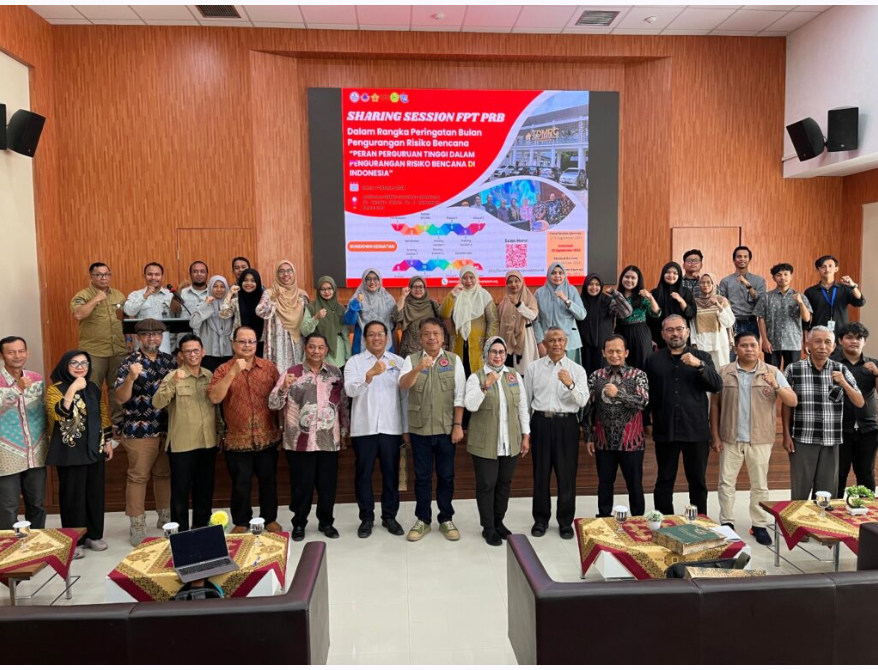
Universitas Sebelas Maret (UNS), through its active participation in the Forum of Higher Education for Disaster Risk Reduction (FPT PRB), attended the 2024 National Disaster Risk Reduction (PRB) Month in Banda Aceh. This annual event, organized by the National Disaster Management Agency (BNPB), aims to raise public awareness and preparedness for disasters. During this year’s commemoration, UNS joined other universities across Indonesia in co-operative planning and knowledge-sharing at both local and regional levels, emphasizing collaborative approaches to mitigate the increasing risks posed by climate change-related disasters.
Led by Dr. Sorja Koesuma, Chair of FPT PRB and Head of the Center for Disaster Research and Mitigation (P3B) UNS, the forum conducted a Sharing Session featuring 16 scientific papers from universities nationwide. The discussions covered disaster risk assessment, tsunami modeling, disaster education, and climate change adaptation strategies. The event, attended by key figures such as the BNPB Deputy for Preparedness and the Tsunami and Disaster Mitigation Research Centre (TDMRC) of Syiah Kuala University, strengthened inter-university cooperation to support evidence-based disaster management policies.
This initiative reflects UNS’s commitment to regional and local co-operative planning for climate change disaster mitigation, contributing to a more resilient Indonesia. Through research, education, and innovation, UNS and its academic partners continue to build stronger community preparedness systems and promote collaborative networks that integrate scientific knowledge into practical disaster risk reduction policies.
Source:
https://p3b.lppm.uns.ac.id/?p=2650
- Formation of Disaster Risk Reduction Forum and Flood Early Warning System in Singopadu Village
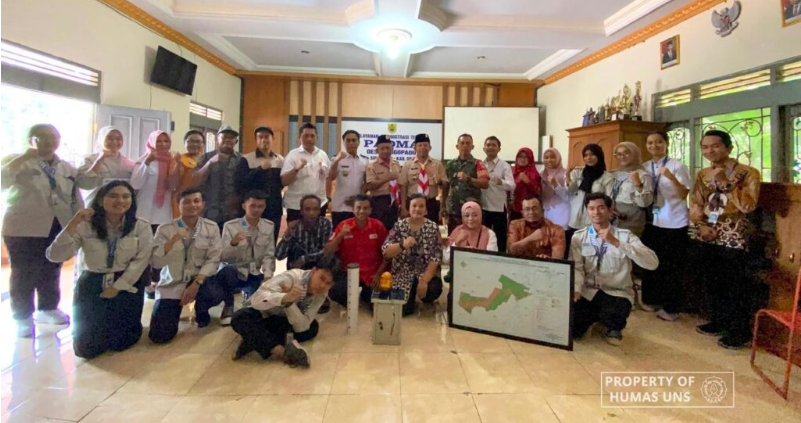
Universitas Sebelas Maret (UNS), through the Student Community Service (KKN) Group 178, initiated a cooperative planning effort to address climate change-related disasters at the local and regional levels by facilitating the establishment of the Disaster Risk Reduction Forum (FPRB) in Singopadu Village, Sidoharjo Subdistrict, Sragen Regency. Guided by Dr. Agung Hidayat, M.Sc., the program also introduced an innovative Early Warning System (EWS) for flood detection in the Mungkung River, named “Weling Prahara.” Installed in the river’s downstream area near the village, this system provides early alerts to residents through a siren mechanism when water levels rise abnormally, enhancing local preparedness for frequent flood threats.
The FPRB inauguration, held on 14 August 2024, was attended by representatives from the Regional Disaster Management Agency (BPBD) of Sragen, local authorities, community leaders, and prospective forum members. The forum aims to strengthen community knowledge and awareness of disaster mitigation while formulating localized strategies to address hazards such as floods, landslides, and strong winds. This initiative demonstrates effective collaboration between the academic community, local government, and residents in building disaster resilience through both technological innovation and community empowerment.
The establishment of the FPRB and the implementation of the Weling Prahara EWS serve as a replicable model for local and regional disaster management planning. Through this partnership, UNS contributes to mitigating climate change disasters by combining research-driven innovation, public education, and stakeholder coordination. The project underscores the university’s commitment to fostering resilient communities that can anticipate and respond proactively to climate-induced disaster risks.
These initiatives demonstrate UNS’s commitment to working with the government in cooperative planning for climate change disasters at both local and regional levels. While current activities primarily focus on mitigation, preparedness, and community resilience, these collaborations lay a strong foundation for future joint planning that may also address the displacement or relocation of affected populations due to climate-related disasters.