SDG 13 In Number
Total energy used (GJ)
20.148
Total energy used from low-carbon sources (GJ)
9.308
13.3.1 Local Education Programmes On Climate
UNS Promotes Climate Change Education through Academic Programs, Community Engagement, and Public Seminars
Universitas Sebelas Maret (UNS) demonstrates a strong commitment to climate change education by implementing local education programmes on climate change risks, impacts, mitigation, adaptation, impact reduction, and early warning. This commitment is reflected through an integrated approach that combines academic curriculum, community service, and public awareness activities. Through formal education at the undergraduate, master’s, and doctoral levels, as well as outreach initiatives and seminars, UNS actively contributes to building public understanding and capacity to address the challenges posed by climate change at both local and regional levels.
- Curriculum and Courses
In the academic field, UNS offers comprehensive education on climate-related issues. The following programs equip students with scientific knowledge and practical skills in understanding climate systems, environmental management, and sustainable development, preparing graduates to contribute to climate change mitigation and adaptation efforts.
- Bachelor’s program
At the undergraduate level, UNS offers a diverse range of programs across multiple faculties that focus on climate change, environmental management, sustainable city planning, renewable energy, and disaster risk reduction. These programs equip students with essential knowledge and skills to actively participate in climate action initiatives in both academic and professional contexts.
- Undergraduate Major in Environmental Science
Courses such as Environmental Law, Environmental Impact Assessment, Environmental Management System, Environmental Management System, Environmental Safety and Health, Strategic Environmental Assessment, Climate Change Studies, Energy Conversion and Conservation, Disaster Management, Environmental Pollution, Sustainable Development Planning, Environmental Audit Basics, and Introduction to Environmental Instrument Development
- Master’s program
UNS offers a diverse range of postgraduate programs that emphasize climate resilience, ecological governance, and sustainable development strategies. These advanced studies demonstrate our commitment to cultivating skilled professionals and future leaders who are capable of driving impactful environmental and climate initiatives.
- Master’s degree in environmental science
Courses such as climate change and impact mitigation, Strategic Environmental Assessment, ISO 14000 series, urgency of laws, environmental science and ethics, environmental audit, environmental change and international cooperation, waste management, and environmental health
Source:
https://pasca.uns.ac.id/s2ilmulingkungan/wp-content/uploads/sites/25/2016/09/KURIKULUM-S2-IL-Final-2017.pdf
- Doctoral program
- Environmental Science Doctoral Study Program
Courses like environmental policy and law, natural resources and environmental management, waste management and technology, environmental management systems & modeling, and environmental diplomacy
- Community Service Program
Beyond academic instruction, UNS integrates climate education into its community service programs to exemplify UNS’s efforts to bring climate change education and action directly to the community level.
- Introduction of Sustainable Energy to Elementary School Students and the Community of Kepyar Village, Wonogiri by UNS Community Service Students
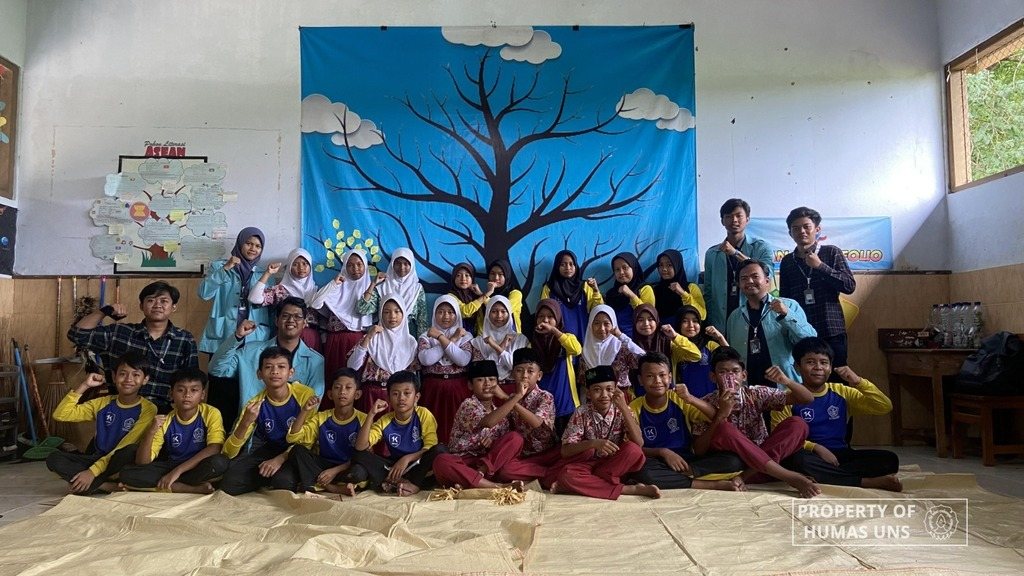

UNS KKN Group 26 (February–March 2024) carried the theme “Sustainable Energy” as an educational initiative for the community in Kepyar Village, Wonogiri, emphasizing the importance of transitioning from fossil fuels to clean energy. Responding to local concerns about unstable electricity supply, particularly for powering water pumps, the team conducted a feasibility study on a Solar Power Plant (PLTS) as an alternative energy source. They also utilized an interactive PLTS trainer kit to demonstrate its operation and potential. The study indicated that applying solar energy could reduce electricity costs and ensure more reliable power for water pumps. In addition, the team organized community education and outreach programs on the importance of sustainable energy and climate awareness, directly supporting SDGs 13, particularly by focusing on improving education, awareness, and human and institutional capacity on climate change mitigation, adaptation, and impact reduction. Children were also involved through hands-on learning activities to build an early understanding of renewable energy. By engaging both community members and youth, this program contributes to local climate education efforts and fosters a sustainable culture of clean energy use, creating long-term environmental and social benefits.
- UNS KKN 61 Students Hold Environmental Awareness Socialization for the Community of Malangjiwan Village, Colomadu, Karanganyar
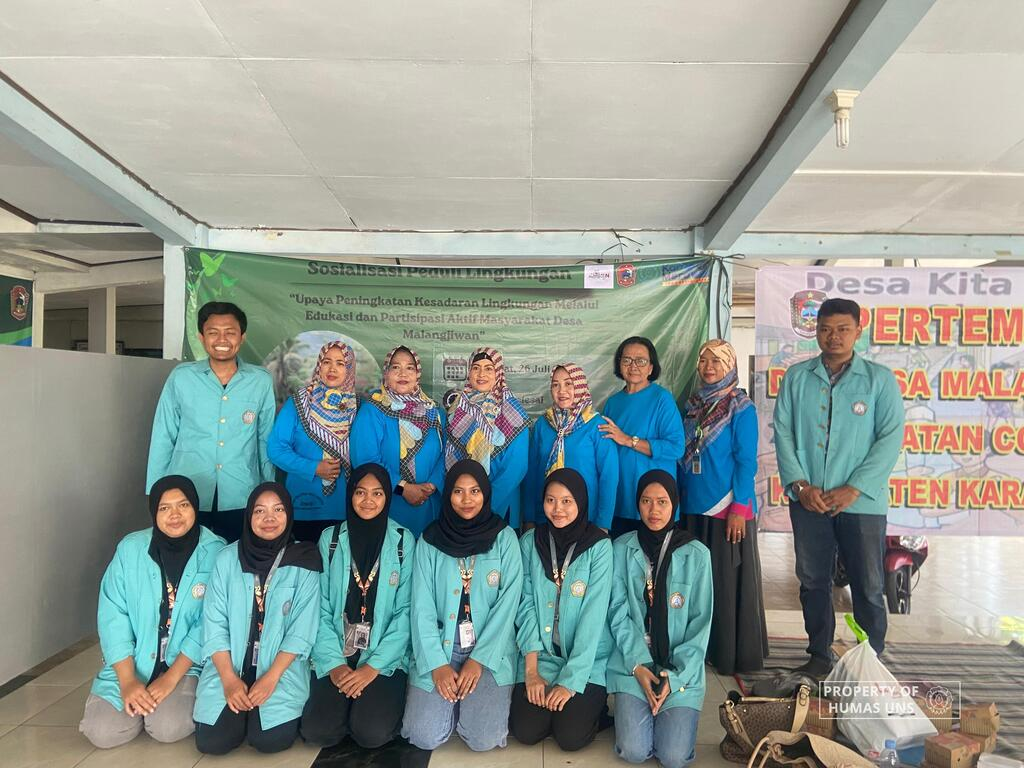
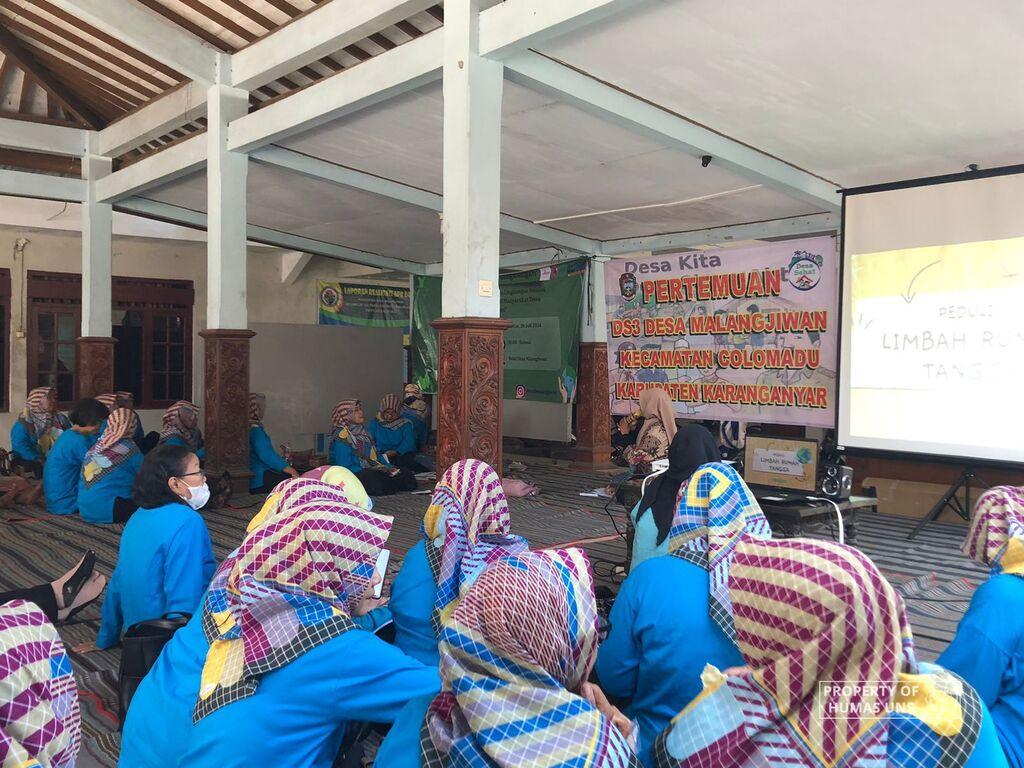
The Student Community Service Program (KKN) group 61 from UNS conducted an Environmental Care Socialization Work Program (Proker) for the people of Malangjiwan Village, Colomadu District, Karanganyar Regency. The activity raised the theme “Efforts to Increase Environmental Awareness Through Education and Active Participation of the Malangjiwan Village Community.” The program was held offline at the Malangjiwan Village Hall on Friday, July 26, 2024. The goal of this program is to raise environmental awareness among the Malangjiwan community through educational activities, including household waste management. The final activity was a symbolic handover of plants to the Malangjiwan Village Head and representatives from the DS3 Village Cadres, demonstrating their commitment to environmental sustainability. It is hoped that the Malangjiwan Village community will apply the knowledge they have acquired about waste management in their daily lives and create a clean, healthy, and sustainable environment. This initiative aligns with SDG 13, particularly by focusing on improving education, awareness, and human and institutional capacity on climate change mitigation, adaptation, impact reduction, and early warning. Through community-based education and active participation, the program enhances local capacity to manage waste responsibly, mitigate environmental impacts, and foster a culture of environmental stewardship in alignment with climate action goals.
- Climate Village program with Local Resources of Kauman Village
https://manggalajournal.org/index.php/maju/article/view/81/85
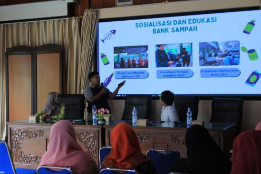
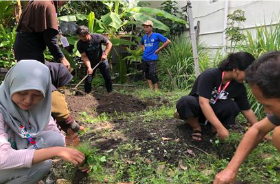
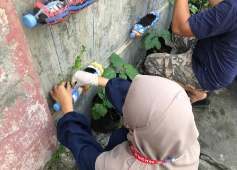
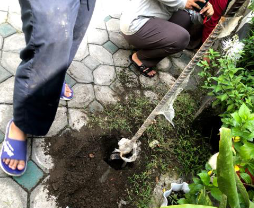
One of the efforts made by the Ministry of Environment and Forestry (KLHK) in the context of climate control is the implementation of the Climate Village Program (ProKlim). The Climate Village Program (ProKlim) is a national movement aimed at mitigating climate change within communities to create a climate-resilient society. The implementation of ProKlim has been running in Surakarta City. One of the villages designated to implement ProKlim is RW 02 Kauman Village, Pasar Kliwon District. Kauman Village is a village that has successfully implemented environmental management actions and has received several awards, ranking among the top 10 superior innovation programs in Surakarta City. Although Kauman Village is not a village directly affected by climate change, the ProKlim concept is not limited to villages directly impacted by climate change. Climate change activities carried out in RW 02 Kauman Village include the creation of vertical gardens and utilizing empty land to achieve food security, as well as implementing waste management as a disaster mitigation measure. In addition, KKN activities were also carried out to support the Climate Village Program in Kauman Village, including replanting the land of the Women Farmers Group (KWT), utilizing plastic bottles as vertical gardens, educating about waste sorting by becoming waste heroes, creating village profile books, promoting waste banks, installing biopores, and environmental-themed coloring competitions for kindergarten children, as well as academic tutoring programs incorporating environmental education. Through these integrated educational and participatory efforts, Kauman Village embodies the realization of SDG 13, specifically by transforming climate education into actionable community practices. The program not only improves local adaptive capacity but also strengthens collaboration between academic institutions and communities, serving as a model for grassroots climate resilience and sustainable environmental development.
- UNS Lecturers and Community Service Program Team Invite the Karangturi Village Community to Build a Proklim Village
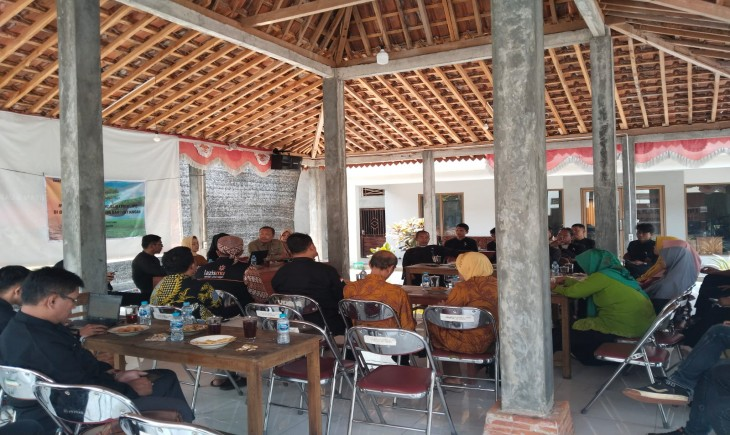
A team of lecturers from the Rural Sociology Research Group, Agricultural Extension and Communication Study Program, Faculty of Agriculture, UNS, invited the people of Karangturi Village to develop a climate-resilient village. Karangturi Village is a village in Gondangrejo District, Karanganyar Regency, most of whose area relies on irrigation from rainwater and water from artesian wells. The Climate Village is a program from the Ministry of Environment and Forestry that invites the community to adapt and mitigate climate change-related issues. The community service activities in Karangturi Village are strengthened by mentoring from the research-based Community Service Program (KKN), which focuses on themes supporting climate-friendly villages. This thematic KKN program implements several programs, including administrative assistance for community groups in preparing for climate-friendly villages, focus group discussions (FGDs) on optimizing former elementary school buildings for community groups and climate-friendly villages, health education for adolescents and health cadres, strengthening the branding of waste banks to increase community participation, education on rainwater and organic fertilizer utilization, and reforestation. All programs are implemented to strengthen the character of Karangturi Village as it transitions into a climate-friendly village. The programs implemented in Karangturi Village strongly support SDG 13 by focuses on improving education, awareness, and human and institutional capacity on climate change mitigation, adaptation, impact reduction, and early warning. Through community mentoring, participatory discussions, and educational activities, this initiative enhances public understanding of climate change and strengthens local institutions in managing environmental challenges. The involvement of various community groups, including youth, women, and health cadres, fosters inclusive participation and behavioral change toward sustainable living practices. By integrating academic knowledge with local wisdom, the program not only builds awareness but also equips the community with practical skills for adaptation and mitigation, reinforcing Karangturi Village’s capacity to become a resilient and climate-conscious community.
- Seminar
UNS also encourages wider dissemination of climate-related knowledge through academic discussions and expert-led sessions.
- Online Seminar “Risk Communication in Climate Change Adaptation” by the Center for Disaster Research and Management (P3B) LPPM UNS
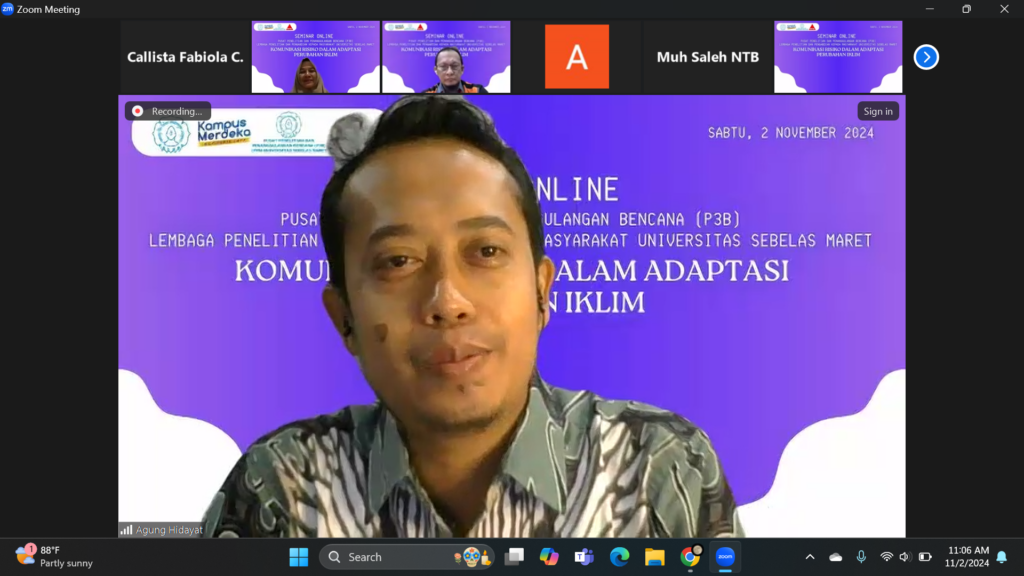
On Saturday, November 2, 2024, the Center for Disaster Research and Management (P3B) at LPPM UNS held an online seminar entitled “Risk Communication in Climate Change Adaptation.” The seminar featured two expert speakers. Avianto Amri, ST, M.Res., Ph.D., Chairman of the Indonesian Disaster Management Society (MPBI), delivered a presentation on “Risk Communication in Climate Change .” In his presentation, Avianto highlighted the importance of strong communication skills in conveying disaster data to policymakers. The second speaker, Dr. Agung Hidayat, S.Pd., M.Sc., from the Master of Environmental Science of the Graduate School, presented material on “Disaster Risks Due to Climate Change in Island Regions “. Dr. Agung explained four main strategies in risk communication, namely understanding community perceptions, utilizing information technology and social media, establishing collaboration with stakeholders, and adopting a local, culture-based approach. These strategies are expected to strengthen community resilience in the face of climate change impacts, especially in vulnerable areas.
Through these comprehensive programs, UNS ensures that knowledge about climate change risks, impacts, mitigation, adaptation, and early warning reaches diverse audiences. By combining scientific education with practical community initiatives, UNS plays a pivotal role in nurturing environmentally conscious individuals and empowering local communities to take part in climate action for a more sustainable future.