17.2.2 Cross Sectoral Dialogue About SDGs
Universitas Sebelas Maret (UNS) Initiates and Participates in Cross-Sectoral Dialogue on SDGs
Seminar on “Legal Aspects in Government Investment Management: Mitigating State Losses”
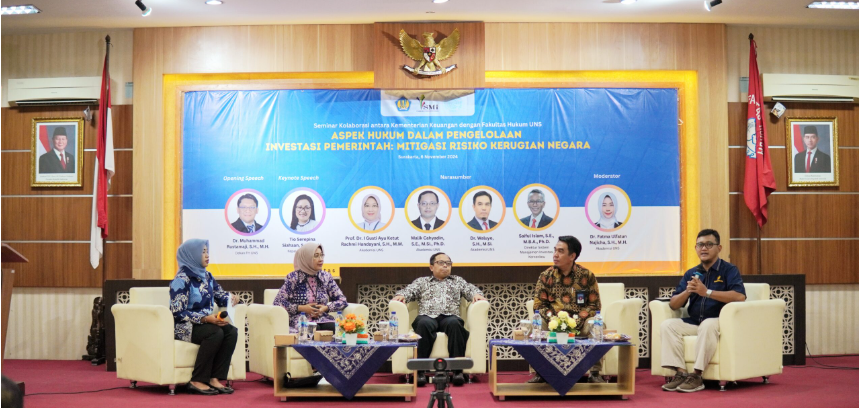
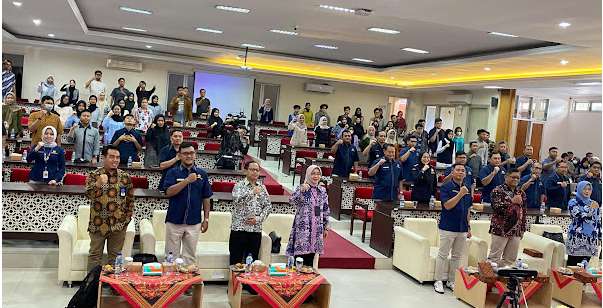
The Faculty of Law at UNS, in collaboration with the Ministry of Finance (Kemenkeu), organized a seminar titled “Legal Aspects in Government Investment Management: Mitigating State Losses” on Wednesday, November 6, 2024.
This event exemplified a cross-sectoral dialogue between higher education institutions and government bodies, highlighting UNS’s active role in fostering multi-stakeholder collaboration to support the Sustainable Development Goals (SDGs). The discussions strengthened the understanding of the legal dimensions of government investment management and strategies to prevent state financial losses.
By promoting transparency, accountability, and proactive risk management through such cross-sectoral engagement, UNS contributes to advancing both SDG 16 (Peace, Justice and Strong Institutions) and SDG 17 (Partnerships for the Goals), particularly in encouraging effective partnerships across sectors to achieve sustainable governance outcomes.
- National Seminar on Humanitarian Islam and Global Challenges in Collaboration with PBNU and UI
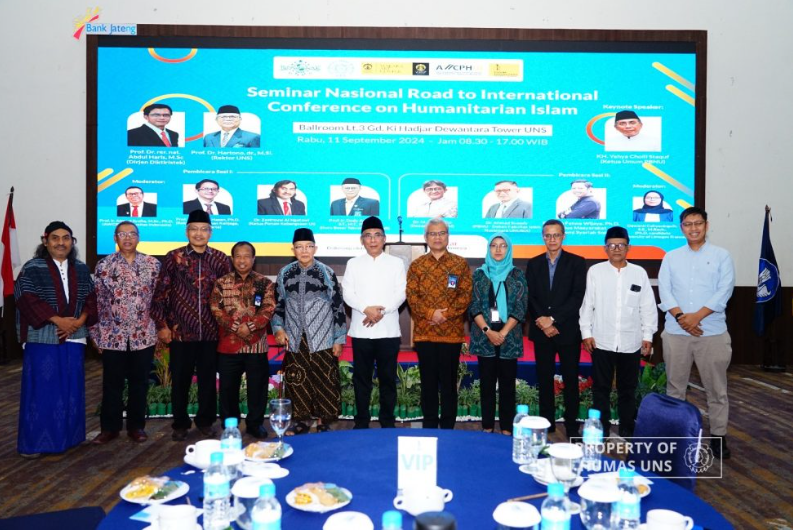
On November 9, 2024, UNS, the University of Indonesia (UI), and Pengurus Besar Nahdlatul Ulama (PBNU) jointly organized a National Seminar as a preliminary event for the upcoming International Conference on “Humanitarian Islam and Global Challenges” at UNS.
This event served as a platform for cross-sectoral dialogue and multi-stakeholder collaboration among higher education institutions and a major religious organization, reflecting UNS’s active contribution to the Sustainable Development Goals (SDGs). The seminar addressed the growing uncertainty and complexity of global circumstances marked by racism, extremism, conflicts, wars, and injustices that threaten peace and human dignity.
By promoting Humanitarian Islam as a framework for peacebuilding, tolerance, and social justice grounded in Islamic values and local wisdom, this collaboration supports SDG 16 — fostering peaceful, just, and inclusive societies — through dialogue that encourages mutual understanding, conflict prevention, and global solidarity.
At the same time, the initiative exemplifies SDG 17 by strengthening cross-sectoral partnerships between academia and civil society organizations to advance shared values of peace, justice, and sustainable development at national and global levels.
Source:
https://uns.ac.id/en/uns-hosts-national-seminar-on-humanitarian-islam-and-global-challenges-in-collaboration-with-pbnu-and-ui/
https://www.nu.or.id/nasional/warek-uns-umat-islam-wajib-mengerti-teknologi-jika-ingin-jaga-humanitarian-islam-B5Klm
- The 14th International Conference on Special Education in the South East Asia Region (ICSAR) 2024
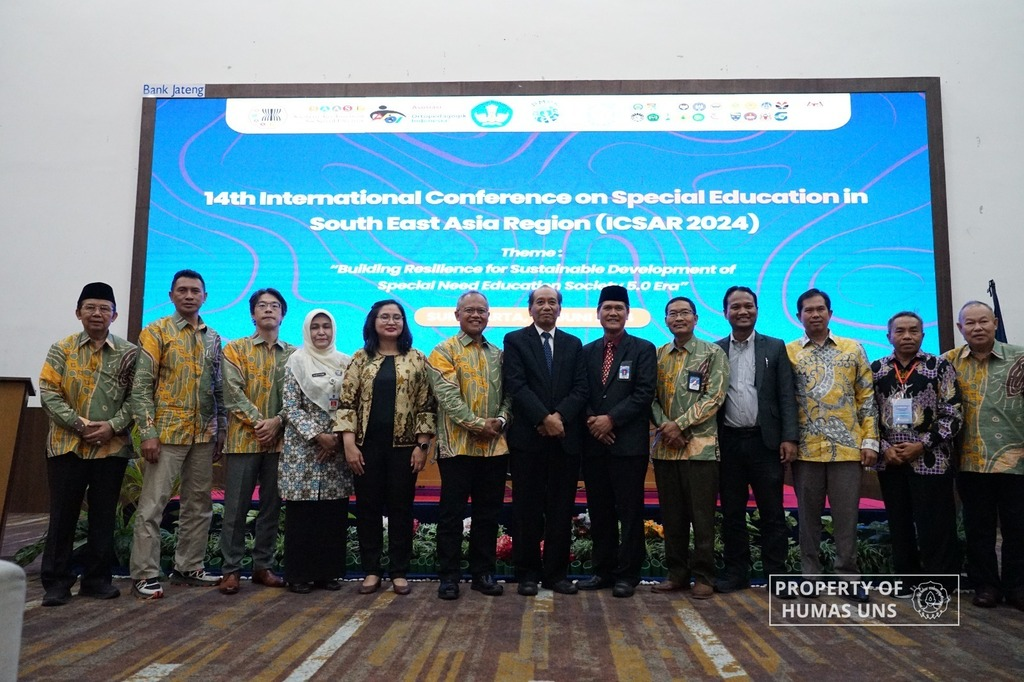
Inclusive education for students with special needs in Southeast Asia continues to face numerous challenges, including unequal access, the need for curriculum adjustments, and limited cross-sector collaboration to enhance educational quality and social inclusion. Responding to these challenges, Universitas Sebelas Maret (UNS) hosted the 14th International Conference on Special Education in the South East Asia Region (ICSAR) 2024, held from Wednesday to Friday, 5–7 June 2024. The hybrid conference was held at the Ki Hadjar Dewantara Tower of UNS and attended by hundreds of participants from various countries.
The conference brought together academics from Indonesia and abroad, government representatives, professional organizations, international institutions, and the private sector to discuss inclusive education and services for persons with disabilities. These efforts are closely related to the achievement of SDG 4 (Quality Education), SDG 10 (Reduced Inequalities), and SDG 17 (Partnerships for the Goals).
Academic representatives came from UNS, the University of Suceava (Romania), and Ewha Womans University (South Korea). From the government, speakers included officials from the Ministry of Education, Culture, Research, and Technology, such as the Director of Community Education and Special Education and the Secretary of the Directorate General of Early Childhood, Primary, and Secondary Education. Non-government organizations and professional associations were represented by SEASEd (Southeast Asia Association for Special Education) and APOI (Indonesian Association of Orthopedagogic Professionals). The private sector was also involved through an MoU signing with PT Bayan Resources Tbk to provide scholarships for students with disabilities, offering direct benefits to the recipients.
On the first day, a Collegial Meeting discussed trends in Special Education study programs, curriculum reconstruction, and innovative strategies to improve the quality of special education. The second day featured speakers from the government, private sector, the World Bank, and international academia, highlighting the importance of cross-sector collaboration in inclusive education. A curriculum reconstruction working group was also established, aiming to create long-term improvements in the quality of special education. The final day included field visits to inclusive education institutions, such as Special Schools (SLB) in Solo, the Disability and Inclusive Education Service Center of Surakarta, and Al Firdaus Elementary School, allowing participants to observe inclusive education practices directly and raise public awareness.
The conference demonstrated the joint commitment of UNS, the government, and NGOs—including professional associations—to expand access and improve the quality of inclusive education, while strengthening cross-sector partnerships to build an inclusive and just society. ICSAR 2024 stands as a concrete example of cross-sectoral dialogue on the SDGs, with UNS acting as a bridge between policymakers, academics, practitioners, professional organizations, international institutions, and the private sector. The event opened new opportunities for long-term collaboration across Southeast Asia.
The long-term plan and sustainability of the ICSAR 2024 outcomes include implementing the reconstructed curriculum across special education programs to improve quality and relevance, as well as monitoring and evaluating the scholarship program for students with disabilities to assess its impact on educational access. Furthermore, UNS is committed to sharing best practices and expanding inclusive collaboration at the regional level across Southeast Asia in a sustainable way.
- The 5th International Conference on Environmental and Sustainable Development (5th ICESD) 2024
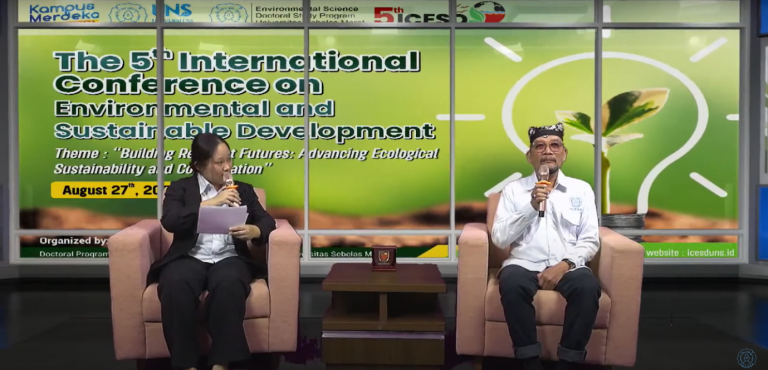
The Graduate School of UNS organized the 5th International Conference on Environmental and Sustainable Development (5th ICESD) on August 27, 2024, which was held online via Zoom. With the theme “Building Resilient Futures – Advancing Ecological Sustainability and Conservation,” the conference served as a strategic forum to discuss global issues, including climate change, biodiversity loss, and the depletion of natural resources. The event was attended by 190 participants and 176 presenters from various countries, showing UNS’s strong role in expanding its international network in the field of sustainability.
The conference featured speakers from universities in Australia, Malaysia, Taiwan, and Indonesia, including representatives from the National Research and Innovation Agency (BRIN). The presence of academics, researchers, and government institutions reflected strong cross-sector collaboration in finding solutions to global environmental challenges. All presented papers were also directed toward publication in reputable international journals, further extending the academic and practical impact of the conference.
By involving academics, government institutions, practitioners, and international stakeholders, the 5th ICESD became a clear example of cross-sectoral dialogue about the SDGs. The conference brought together different sectors to strengthen global collaboration in achieving SDG 13 (Climate Action), SDG 14 (Life Below Water), SDG 15 (Life on Land), and SDG 17 (Partnerships for the Goals). It also reaffirmed UNS’s role as a catalyst for international dialogue on sustainability.
- The 1st International Conference on Cultural Policy and Sustainable Development (ICPSD 2024)
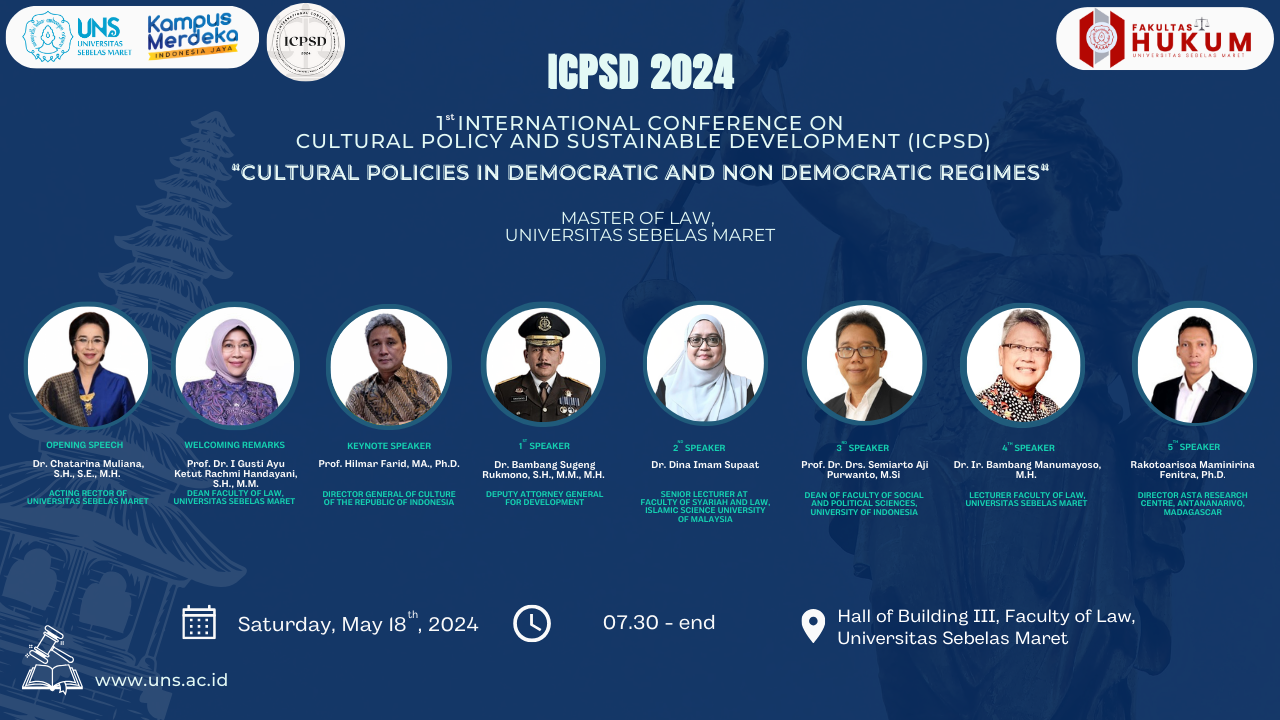
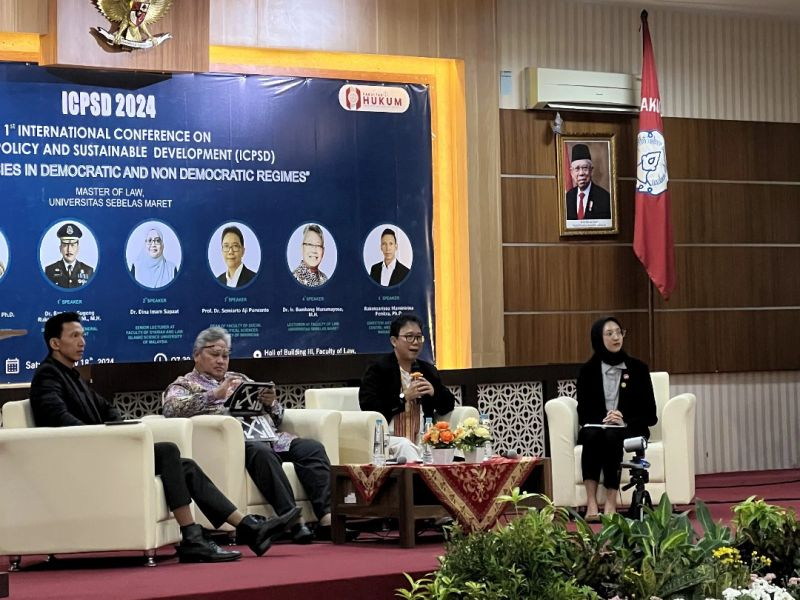
On 18 May 2024, the Master of Law Program at Universitas Sebelas Maret (UNS) organized the 1st International Conference on Cultural Policy and Sustainable Development (ICPSD 2024), held under the theme “Cultural Policy in Democratic and Non-Democratic Regimes,” which also included sub-themes related to Sustainable Development Policy. The conference was held in a hybrid format and featured both national and international scholars, as well as government officials, including the Director General of Culture, Prof. Hilmar Farid, who delivered the keynote speech. The event served as a platform to exchange ideas and strategies on sustainable development policy, law, and cultural policy.
The conference brought together diverse stakeholders from various sectors, including academics and policymakers, to discuss the challenges and opportunities in achieving the Sustainable Development Goals. With the participation of government representatives and international academics, ICPSD 2024 emphasized the importance of collaboration among educational institutions, policymakers, and professional sectors in supporting the SDGs.
Through the organization of ICPSD 2024, UNS played an active role in initiating and facilitating cross-sectoral dialogue on cultural and sustainable development policy.
Source : https://seminarcfp-mih.uns.ac.id/
- International Conference on Multidisciplinary Studies (ICoMSI) 2024
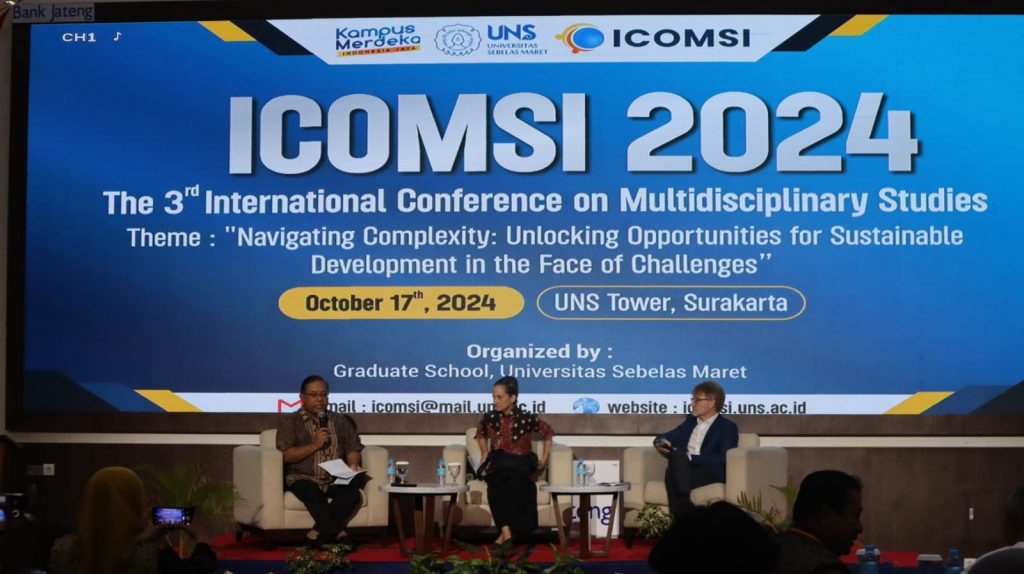
The Graduate School of UNS organized the International Conference on Multidisciplinary Studies (ICoMSI) 2024 on 17 October 2024 at the UNS Tower Hotel and online. Carrying the theme “Navigating Complexity: Unlocking Opportunities for Sustainable Development in the Face of Challenges,” the conference gathered 100 participants from various national and international universities. It served as a forum to promote multidisciplinary dialogue and collaboration on issues related to sustainable development, cultural preservation, social justice, and ecological balance.
Cross-sector involvement was reflected through the participation of government representatives, including Diane Butler, Ph.D., a researcher from the National Research and Innovation Agency (BRIN), who delivered a keynote speech emphasizing the link between academia and public policy in supporting sustainable development. The conference also involved both domestic and international academics, strengthening the global perspective in discussions related to the SDGs.
Through the organization of ICoMSI 2024, UNS played a crucial role in initiating and facilitating dialogue between the academic and government sectors, discussing innovative approaches to achieving the Sustainable Development Goals.
Source : https://pasca.uns.ac.id/blog/2024/10/17/gelar-tahun-ketiga-konferensi-internasional-icomsi-2024/
- The 19th Joint Conference on Chemistry 2024

UNS organized the 19th Joint Conference on Chemistry 2024, held on September 12, 2024, at the UNS Tower, “Ki Hadjar Dewantara.” The conference was a collaboration among seven universities in Central Java, gathering participants and speakers from various countries, including Italy, Japan, Spain, and Malaysia. The main theme focused on material science for the future, with applications in polymers, nanomaterials, catalysis, pharmaceuticals, green chemistry, and environmentally friendly technologies, all in line with the Sustainable Development Goals (SDGs).
The event featured cross-sectoral dialogue through the participation of academics, the industrial sector, and NGOs. Keynote speakers included Oki Muraza, Deputy President Director of Pertamina, a state-owned enterprise (SOE) in the energy and oil and gas sector, who plays a key role in advancing sustainable energy and technology development in Indonesia. In addition, Prof. Claudio Tiribelli, representing the Italian Liver Foundation, an international NGO in the field of health research, also contributed to strengthening cross-sector collaboration at the conference.
With its strong cross-sectoral participation and focus on sustainability issues, the 19th Joint Conference on Chemistry 2024 serves as a clear example of cross-sectoral dialogue regarding the SDGs. UNS played a crucial role in initiating and facilitating knowledge exchange and international collaboration among academia, government, industry, and NGOs to support the achievement of the Sustainable Development Goals.
Source : https://jcc.uns.ac.id/
- The 2nd International Conference on Environmental Management (ICEM) 2024
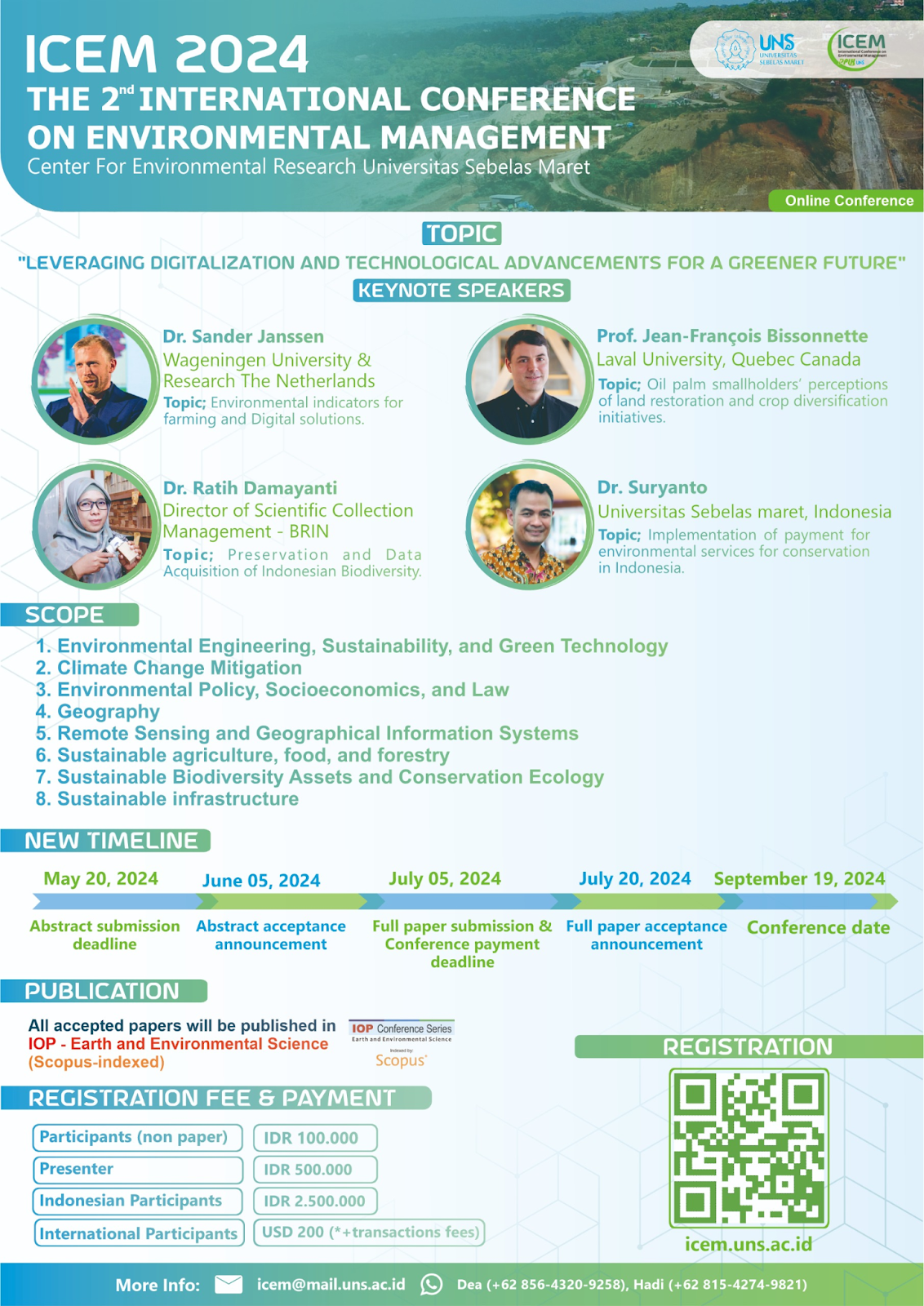
UNS, through its Center for Environmental Research, organized the 2nd International Conference on Environmental Management (ICEM) 2024 on 19 September 2024 under the theme “Leveraging Digitalization and Technological Advancements for a Greener Future.” The conference featured speakers from various countries, including Dr. Sander Janssen from Wageningen University & Research (The Netherlands), Prof. Jean-Francois Bissonnette from Laval University (Canada), as well as academics and researchers from UNS and the National Research and Innovation Agency (BRIN), Indonesia.
The theme emphasized the importance of collaboration among academia, government institutions, and environmental practitioners to promote sustainability and conservation.
ICEM 2024 served as a cross-sectoral dialogue forum, discussing topics such as sustainability, climate change mitigation, biodiversity conservation, green technology, sustainable agriculture and forestry, and sustainable land and infrastructure management. The involvement of BRIN demonstrated strong collaboration between academia and government in addressing natural resource management and conservation, highlighting interaction among research institutions, universities, and government agencies to develop science-based solutions for environmental challenges.
Source : https://icem.uns.ac.id/