SDG 5 In Number
Number of women starting a degree
6.489
Number of first-generation women starting a degree
4.113
Number of students starting a degree
9.032
Number of first-generation students starting a degree
6.205
Number of students
27.604
Number of employees
3.760
Number of academic staff
1.950
Number of senior academic staff
685
Number of female senior academic staff
303
Number of graduates by subject area (STEM, Medicine, Arts & Humanities / Social Sciences): Total
6.192
Number of graduates: STEM
1.905
Number of graduates: Medicine
627
Number of graduates: Arts & Humanities / Social Sciences
3.660
Number of female graduates by subject area (STEM, Medicine, Arts & Humanities / Social Sciences): Total
4.353
Number of female graduates: STEM
1.244
Number of female graduates: Medicine
301
Number of female graduates: Arts & Humanities / Social Sciences
2.808
Number of graduates: Total
6.192
5.3.3 Women’s Access Schemes
Gender equality is a fundamental principle upheld by Sebelas Maret University (UNS) as part of its commitment to achieving Sustainable Development Goal (SDG) 5: Gender Equality. UNS consistently implements various programs, policies, and initiatives that support increased participation, capacity, and access for women in academic, social, and leadership fields.
One institution playing a strategic role in this effort is the Center for Population and Gender Research (PPKG) under the UNS Institute for Research and Community Service (LPPM). The PPKG LPPM serves as a research and advocacy platform focused on gender issues, women’s empowerment, and inclusive sustainable development. Through research, training, and outreach activities, the PPKG strives to strengthen the role of women in various sectors of social and academic life.
UNS’ commitment to women’s empowerment is also reflected in the activities of the Sebelas Maret University Professors’ Council, which actively addresses the role of female academics in higher education. At the “UNS Professors’ Council Workshop: The Role of Female Academics,” female professors discussed the challenges and contributions of women in research, teaching, and academic leadership in Indonesia. This forum serves as a strategic space to strengthen the network of female academics and promote equal opportunities in academic careers.
- Education and Digital Campaigns through Social Media
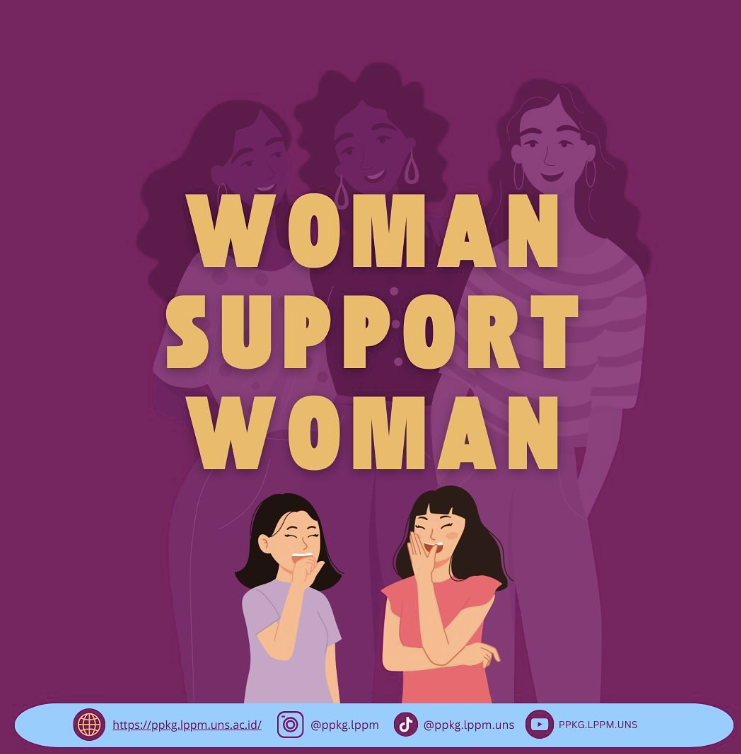
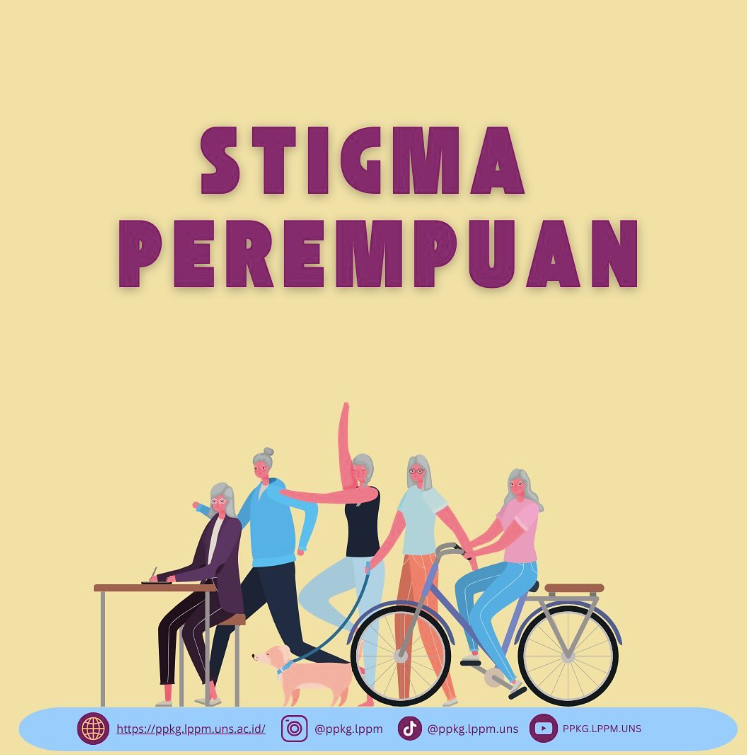
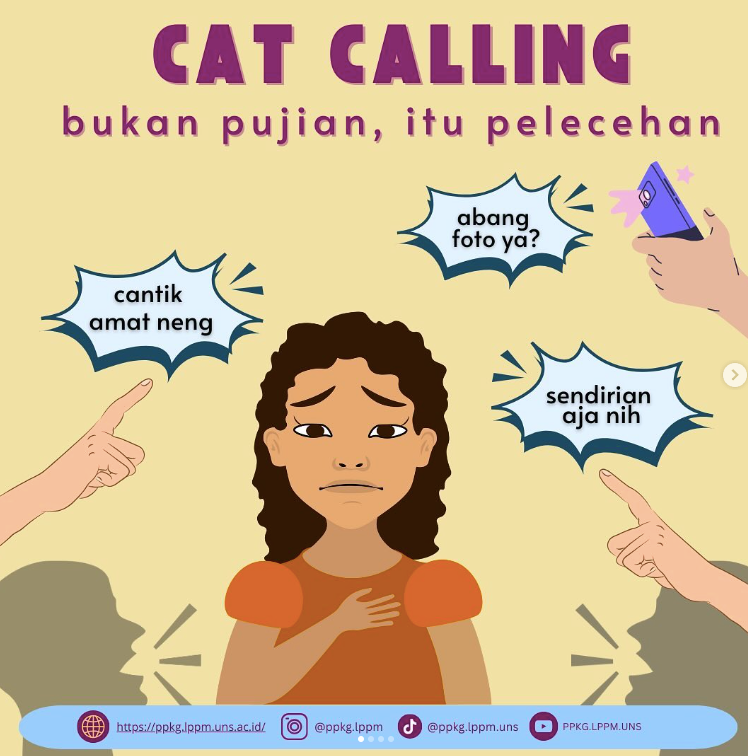
PPKG LPPM UNS actively manages the official Instagram account, @ppkg.lppm, which serves as a platform for education and public campaigning on gender equality issues. Through this medium, PPKG regularly shares various content highlighting important topics such as social stigma against women, support from other women (women support women), as well as preventing acts of verbal harassment or cat-calling.
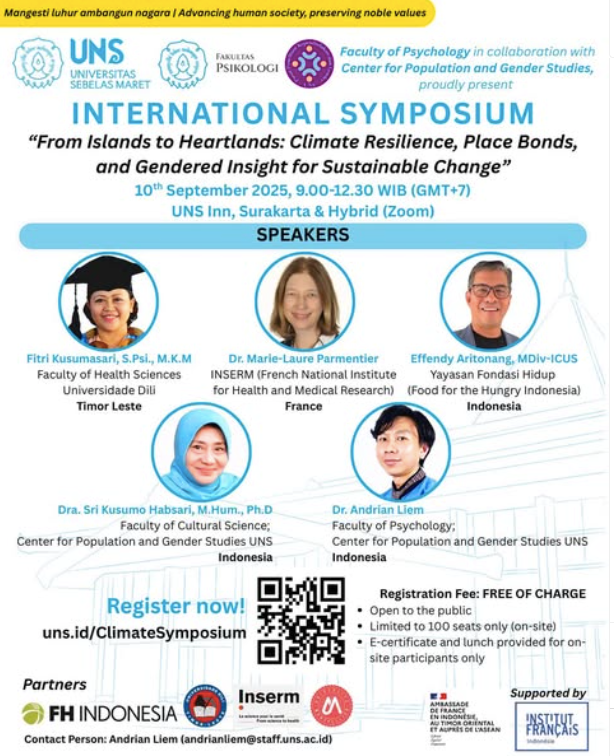
The content serves not only as a form of outreach but also as a digital empowerment strategy that fosters collective awareness of the importance of gender equality in public and academic spaces. The platform expands women’s access to information and critical discussions on gender issues, while also serving as a platform for online mentoring and community support. Furthermore, the PPKG LPPM UNS also serves as an organizer. International Symposium “From Islands to Heartlands: Climate Resilience, Place Bonds, and Gendered Insight for Sustainable Change”, which brings together researchers across countries to discuss climate resilience issues through a gender perspective.
- Women’s Empowerment and Access Activities in Academics
- UNS Professors’ Council Discussion Discusses the Role of Female Academics
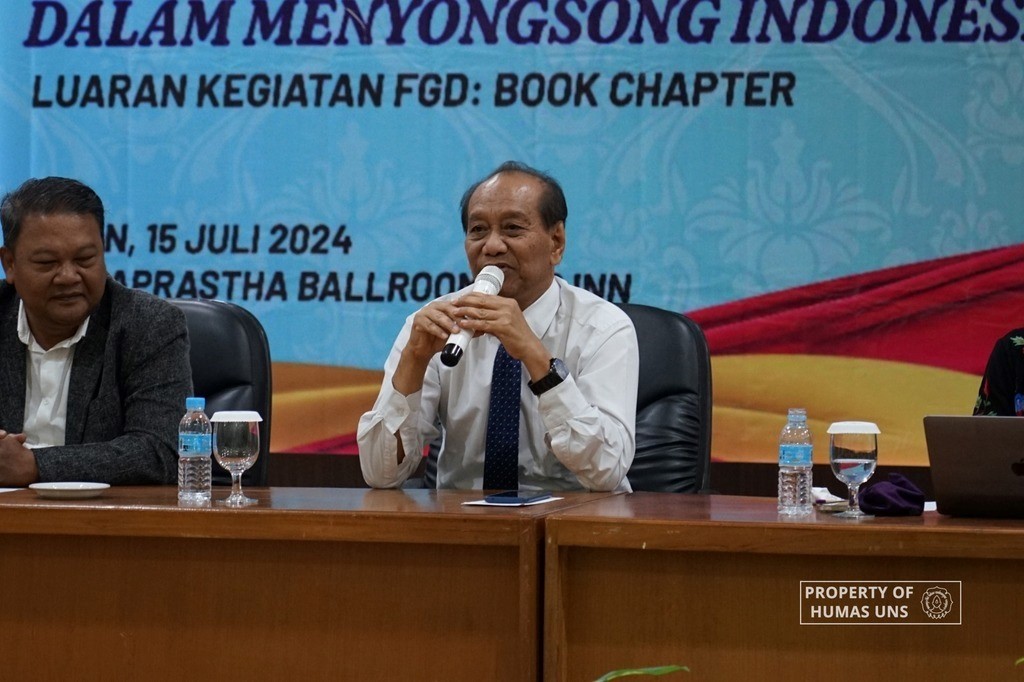
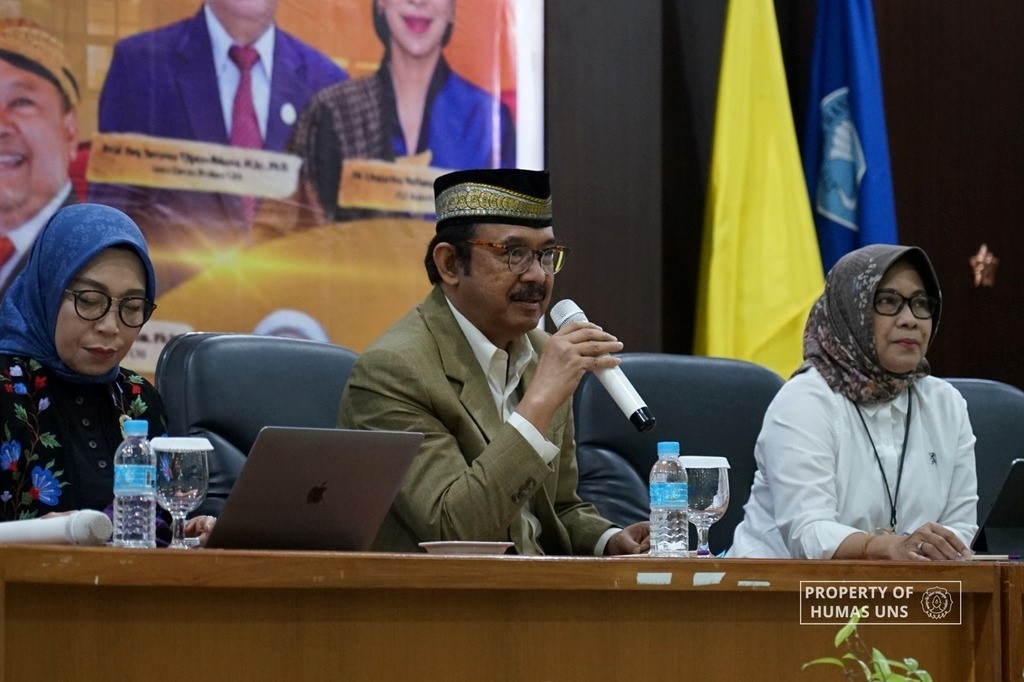
The Board of Professors at Sebelas Maret University (UNS) Surakarta assesses the crucial role of female academics in achieving a golden Indonesia 2045. The identity of female academics has provided various supports for socio-cultural resilience. This was conveyed at a discussion event on the topic “The Role of Female Academics in Welcoming a Golden Indonesia 2045.”
The workshop, organized by Commission III of the UNS Council of Professors, took place offline in the UNS Inn Ballroom on Monday, July 15, 2024. The event aimed to discuss the concept and policies of Indonesia Emas 2024 and their implications for the role and contribution of female academics in realizing it. The challenges, potential, and dynamics of female academic transformation require further exploration. The resulting outputs will include: a book chapter.
Prof. Drs. Suranto Tjiptowibisono, M.Sc., Ph.D., Chair of the UNS Board of Professors, stated that women’s roles are crucial in producing a quality generation of Indonesians. This is crucial as Indonesia approaches its demographic dividend. He believes that women’s roles are reflected within the family. The quality of a family is determined, in part, by the role of women, or mothers.
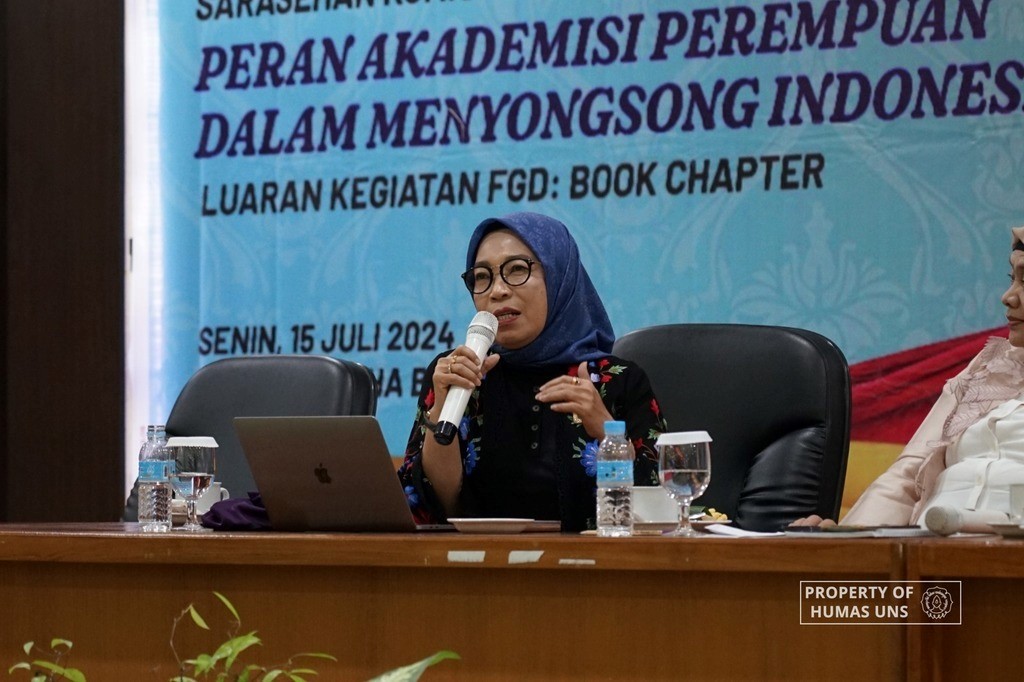
“When great women ‘color’ the Indonesian population, then we are optimistic about having a quality population,” said Prof. Suranto.
He hopes the workshop with renowned speakers will inspire Indonesia’s journey toward its golden age. This year will be a time when Indonesia will be inhabited by citizens committed to equality. This ideal is highly feasible, given that Indonesia has even had a female leader.
Prof. Dr. Ir. Ahmad Yunus, M.S., Acting Vice Rector for Academic and Student Affairs at UNS, stated that female academics outnumber male academics at UNS. Therefore, he believes that female academics will play a significant role in the development of science and technology, as well as in improving economic welfare in society.
“The proportion trend at UNS is that in almost all study programs, there are more female students than male students,” said Prof. Yunus.
Two speakers were present at the Council of Professors’ Discussion. They were Prof. Dr. Nunuk Suryani, M.Pd.., from the Faculty of Teacher Training and Education (FKIP) at UNS, and Prof. Dr. Ismi Dwi Astuti Nurhaeni, M.Si.., from the Faculty of Social and Political Sciences (FISIP) at UNS. The discussion, moderated by Prof. Dra. Diah Kristina, M.A., Ph.D., addressed the topic of female academics.
In her presentation, Prof. Ismi highlighted the potential of female academics. This is evident in the increased attention women receive on social inclusion issues. Female academics are also involved in education and raising critical awareness, particularly in areas such as gender issues.
Another potential is seen in the mentorship and support provided by female academics to victims of discrimination. Female academics also build collaborations and partnerships with various disciplines.
“Women as academics have the potential to conduct research and develop policies,” said Prof. Ismi.
The speakers’ presentations were followed by a question-and-answer session. Several professors raised questions that touched on the essence of the discussion regarding the role of female academics. The UNS Council of Professors’ workshop concluded with a summary of the discussion by Prof. Diah, the moderator.
- The Psychology Student Association (HIMAPSI) of the Faculty of Psychology, Sebelas Maret University, Surakarta, Successfully Approves the 2024 Student Organization Capacity Building Program (PPK Ormawa) Funding
The Psychology Student Association (Himapsi) of Sebelas Maret University (UNS) has successfully qualified for the 2024 Student Organization Capacity Building Program (PPK Ormawa). PPK Ormawa is a program designed to enhance student organization capacity through a series of training processes conducted by universities, which are implemented in community service and empowerment programs. Organized by the Directorate General of Higher Education, Research, and Technology, Ministry of Education, Culture, Research, and Technology, this program aims to enhance the quality of organizations in higher education institutions in Indonesia through a community learning agenda and a vision for community service and empowerment.
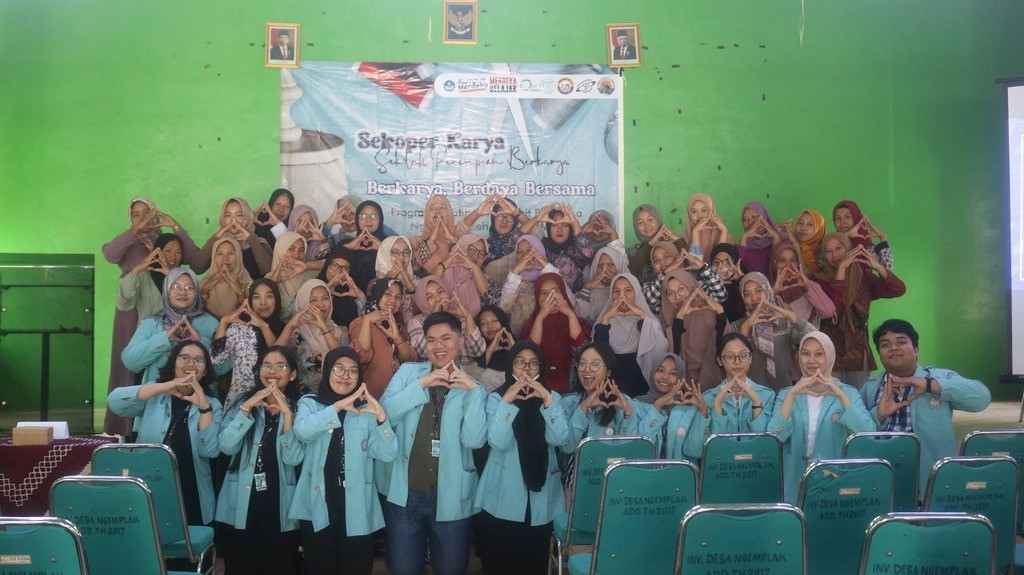
Nasywa Hayu Fatikah, the Head of the 2024 Himapsi UNS Student Organization (Ormawa) PPK Team, stated that she and her team were grateful for the opportunity to participate in this year’s PPK Ormawa Dikti program, thanks to the positive feedback received from various parties. “My team and I are very grateful for being successfully funded this year. I believe that the PPK Ormawa program is highly beneficial and impactful for all parties involved. In addition to expanding the Ormawa capacity network, this program has an impact on the Ormawa PPK Team and Ormawa administrators, particularly in enhancing life skills such as socializing, negotiating, problem-solving, and public speaking through direct community experience. For our partners, this program certainly has a positive impact because of the village empowerment that is being developed.”
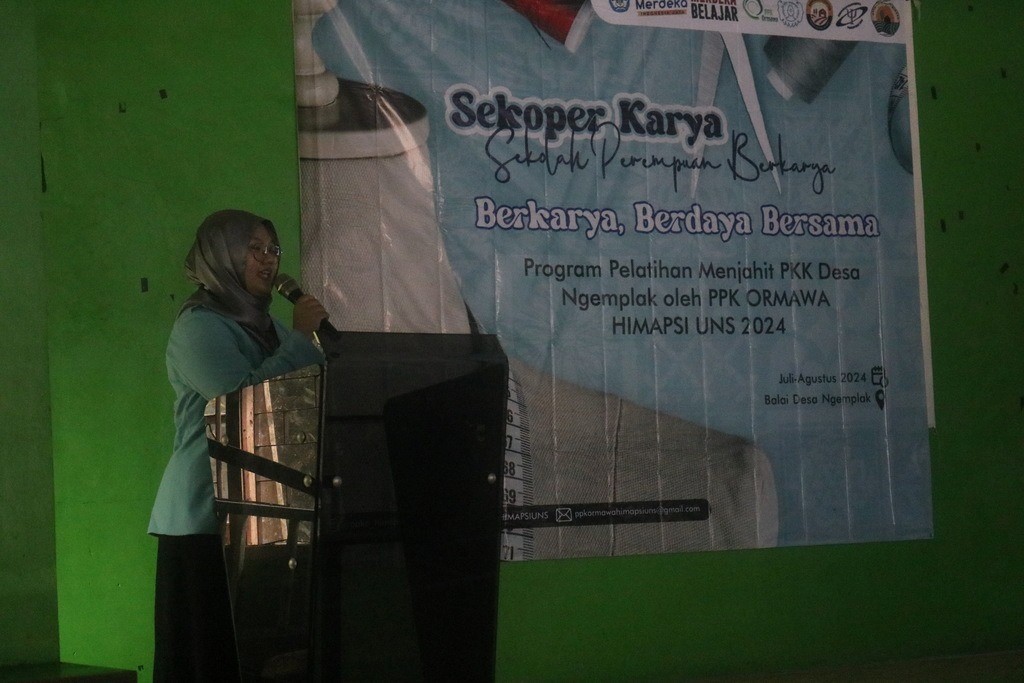
This year, the UNS Himapsi Student Organization (Ormawa) PPK Team (PPK) presented the Women’s School program, entitled “Efforts to Increase Work Productivity by Optimizing a Sense of Community Based on Sewing Training in the PKK Community in Ngemplak Village, Karanganyar.” This sewing training program aims to enhance the productivity of PKK members by developing economically valuable skills, while also strengthening their sense of community. This includes empowering PKK members with skills that can create business opportunities, encouraging creativity and innovation in sewing products, and facilitating the exchange of knowledge and experiences that strengthen social bonds within the community.
This program was initiated in response to a problem in Ngemplak Village, Karanganyar, namely the low work productivity of the majority of women. Furthermore, the UNS Himapsi Student Organization (Ormawa) PPK team also recognized the potential for an alternative solution, namely, leveraging the existing PKK Community. Based on this situation, the proposed program focuses on applying community psychology to optimize the role of the PKK Community in enhancing women’s work productivity in Ngemplak Village through a community-based approach.
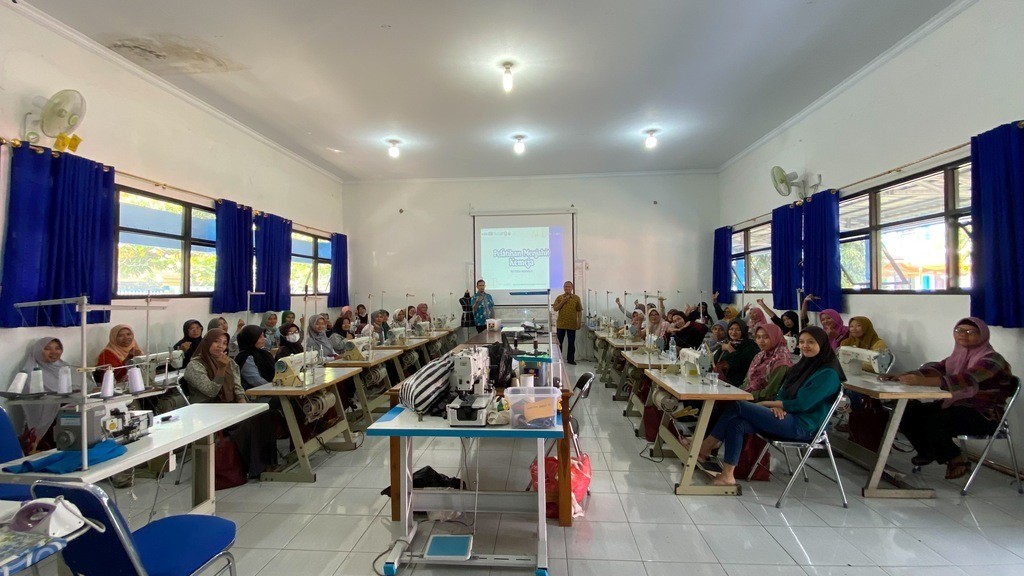
The program will begin with the launch and socialization of the sewing training program to the Ngemplak Village community. After that, registration and the creation of participant groups, consisting of 40 members from the Ngemplak Village PKK, will be carried out to coordinate the implementation of the activities. The primary objective of this program is to provide sewing training through 13 meetings, targeting the production of tote bags, house dresses, shirts, and robes. This will be concluded with a digital marketing workshop to impart knowledge and practical skills related to product promotion in the digital era. The next plan, the PPK Ormawa Himapsi UNS Team, will carry out a series of activities to increase the Sense of community among all Women’s School participants, which will provide provisions for the creation of a sewing community to sustain the program. Of course, the formation of this community is supported by the revitalization of the BUMDes, which includes an inventory of sewing equipment serving as the community’s headquarters. At the end of the activity, the PPK Ormawa Team plans to hold an exhibition and fashion show, as well as the opening of the BUMDes, with the help of the sewing community, which will invite the general public to participate in the celebration. “Although the process felt challenging and involved many challenges, I ultimately believe that the experiences I gained from this program have provided me with valuable lessons about life beyond the classroom. Of course, my colleagues and I hope that this program runs optimally and has a positive impact on all stakeholders. We also sincerely hope that the community we’ve formed will continue to thrive even after the program concludes, as a form of sustainability for the sewing training program in Ngemplak Village, improving the skills and productivity of women more broadly,” said Nasywa.
Through these various programs, UNS not only provides access and support for women through mentoring, research, and scientific activities, but also encourages organizational culture change toward an inclusive and gender-equal campus. Strong institutional support through the PPKG LPPM, cross-disciplinary collaboration, and recognition of the contributions of female academics are concrete evidence of UNS’s commitment to achieving SDG 5.
With these various initiatives and policies, Sebelas Maret University demonstrates a strong commitment to expanding women’s access and participation in both academic and community settings. Through institutional support, such as the PPKG LPPM (Research Institute for Women’s Empowerment), as well as international-level scientific activities, public awareness campaigns, and gender-sensitive academic discussion spaces, UNS plays an active role in strengthening women’s empowerment.
In 2024, the UNS provided research and community service funding focused on achieving SDG 5: Achieve gender equality and empower all women and girls. For example, several UNS researchers conducted studies and community service related to gender, including:
- Dr. Siti Khoiriyah, S.Si, M.Si. – “Empowerment of Aisyiyah Women Community in Jaten Subdistrict to Build Family Resilience and Face Climate Change”, which provides mentoring and capacity-building programs for women’s communities.
- Lely Ratwianingsih, S.E., M.Sc. – “Quality of Life of Working Women in a Conceptual and Empirical Study of Islamic Economics”, which highlights women’s access schemes through training and career development opportunities.