SDG 3 In Number
Number of graduates
6.192
Number of graduates in health professions
927
3.3.1 Current Collaborations With Health Institutions
Universitas Sebelas Maret (UNS) actively engages in collaborations with health institutions at the local, national, and global levels to support the improvement of health and well-being in society. Through these partnerships, UNS is committed to contributing to the development of more effective health practices, the exchange of knowledge, and capacity-building efforts in the health sector.
- Local Collaboration
- Improving Elderly Health through Diabetes Education and Exercise in Collaboration with PADIMAS
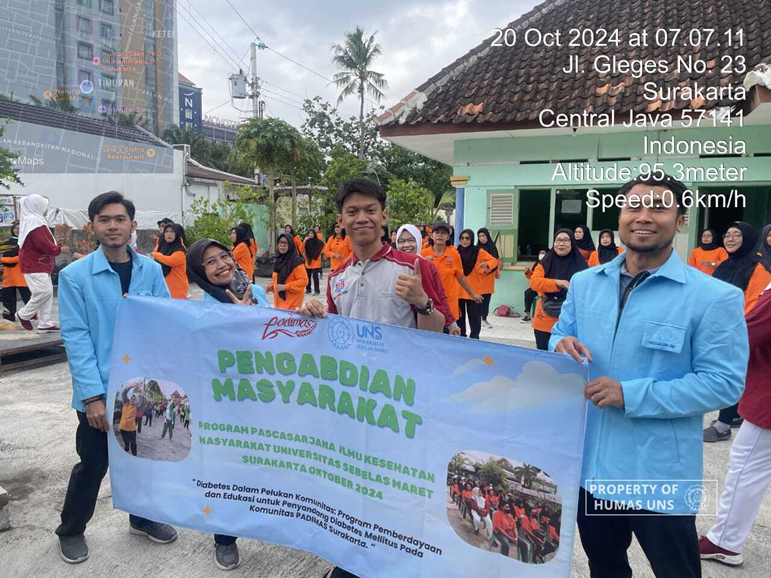
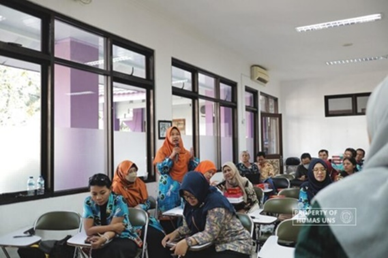
Universitas Sebelas Maret (UNS), through the Community Service Group (PKM) of the Postgraduate Program in Public Health (IKM), organized a diabetes education and exercise program for elderly participants, in collaboration with the Surakarta Diabetes Mellitus Association (PADIMAS) under Klinik Pratama Jasmine 2. This initiative forms part of UNS’s support for SDG 3 – Good Health and Well-Being.
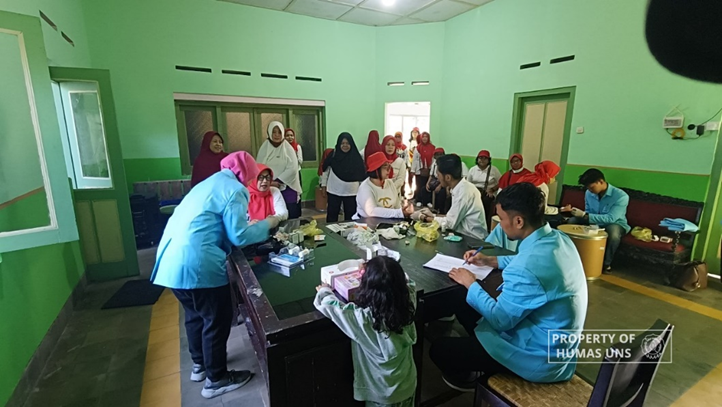
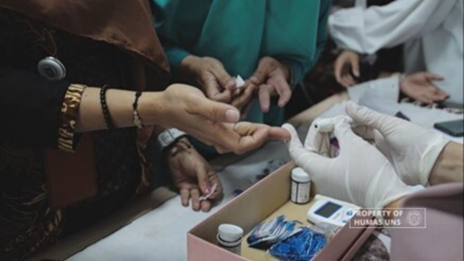
The program was conducted in two sessions, involving 30 elderly participants. Each participant attended educational sessions on Diabetes Mellitus, covering topics such as symptoms, normal blood sugar levels, healthy eating, medication adherence, and the importance of physical activity. Additionally, participants participated in diabetes exercise sessions, with blood sugar levels measured before and after the activity. Evaluation results showed an average 40% increase in participants’ knowledge and a 12 mg/dL average reduction in blood sugar levels following the exercise sessions.
The program received full support from the leadership of the IKM Postgraduate Program at UNS, who emphasized the university’s commitment to improving public health through knowledge-based and evidence-driven community service. The program’s output was the increase in participants’ knowledge and awareness of diabetes management, while the outcome included changes in healthy behavior, such as consistent physical activity and adherence to a balanced diet.
For sustainability, UNS plans to continue the program every semester, expand the number of participants, and strengthen collaboration with local elderly organizations and clinics. The program is expected to serve as a community-based health intervention model with long-term impact for the elderly population in Surakarta.
- National Collaboration
- UNS Strengthens National Collaboration with the Ministry of Health to Improve Public Health
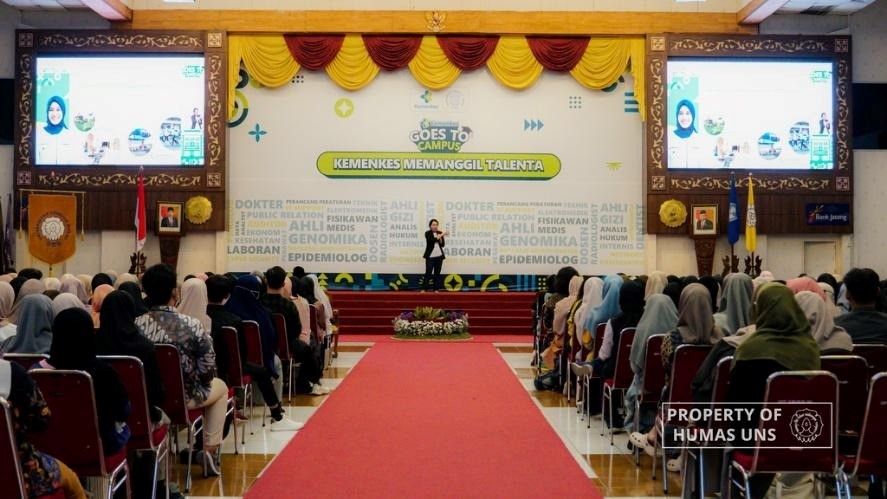
Universitas Sebelas Maret (UNS) reinforces its commitment to SDG 3 – Good Health and Well-Being through a national collaboration with the Ministry of Health of the Republic of Indonesia. This partnership aims to improve health and well-being across the population by engaging UNS students and young researchers in various innovative public health programs.
The program involves more than 100 students and young researchers, who actively participate in discussion forums, collaborative research, and the development of solution ideas for priority health issues, including reducing stunting, improving access to health services, and digitalizing the national health system. The output of this collaboration includes the development of community-based health innovation models, with the outcome being increased participant capacity, strengthened public policies, and tangible contributions to the transformation of national health services.
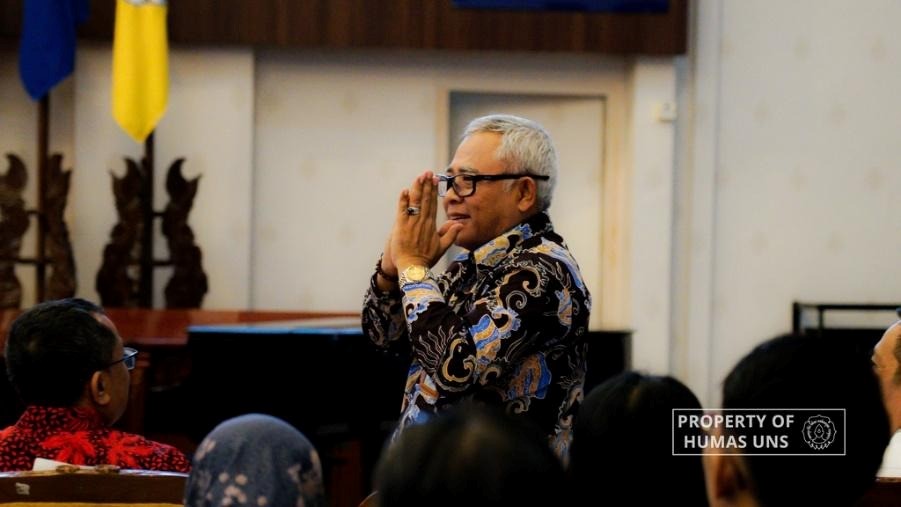
The Rector of UNS emphasizes the university’s commitment to being a strategic partner of the government in enhancing public well-being and supporting national health policies. “UNS is committed to being a strategic partner of the government in creating a healthier and more prosperous Indonesian society,” he stated. This leadership commitment forms the foundation for program sustainability, which is planned to continue through joint research, the development of health innovation models, and the expansion of collaboration with other health institutions, both nationally and globally.
This national collaboration demonstrates UNS’s concrete contribution to transforming Indonesia’s health system in an inclusive, sustainable, and innovation-driven manner, while reaffirming the university’s role in improving public health through strategic, cross-sector partnerships.
- National & Global Collaboration
- UNS Faculty of Medicine Facilitates National and Global Collaboration in HIV Research to Improve Public Health
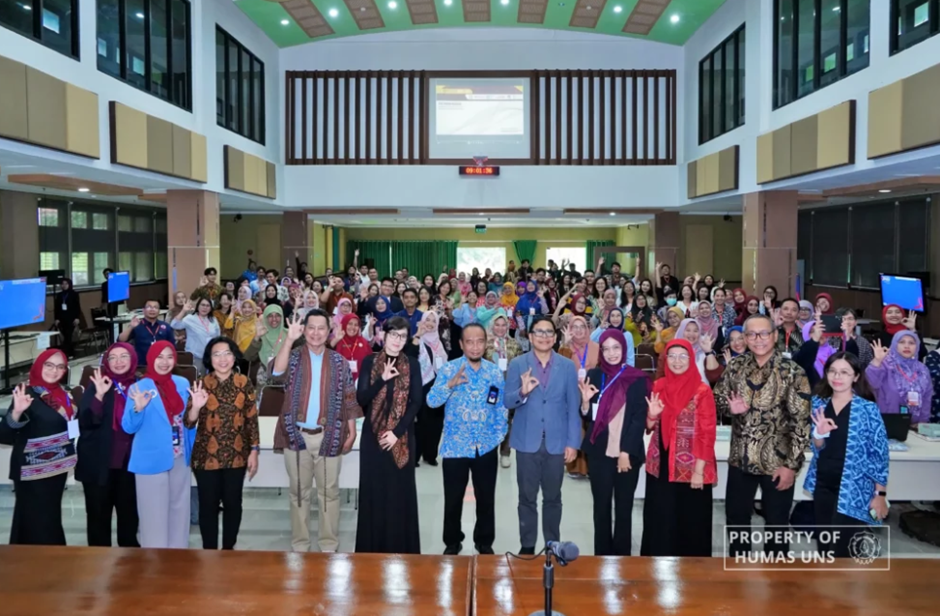
The Faculty of Medicine (FK) at Universitas Sebelas Maret (UNS) hosted the 2024 National Meeting of the HIV Research Network (JPHIV), held in a hybrid format on 6 December 2024, with participation from more than 2,800 attendees across Indonesia. This event supports SDG 3 – Good Health and Well-Being and SDG 17 – Partnership for the Goals, as an example of cross-institutional collaboration aimed at improving health and well-being.
The event represents national collaboration, as UNS partnered with the Indonesian HIV Research Network (JPHIV-Ina) and the Ministry of Health of the Republic of Indonesia, both national health institutions. This collaboration involved over 300 in-person participants at FK UNS and focused on developing strategies for HIV prevention and management across Indonesia, including improving access to health services and strengthening the capacity of researchers and clinical practitioners.
Additionally, the activity constitutes global collaboration, as it involved international organizations such as UNAIDS Indonesia and UN Women Indonesia. The participation of global partners facilitated international knowledge exchange, access to best practices from around the world, and the strengthening of cross-country research networks, thereby ensuring the event’s impact extended beyond the national context to align with global health standards and strategies. 2,500 online participants from various locations joined the interactive sessions, demonstrating the broad reach of this global collaboration.
The Rector of UNS and the leadership of the Faculty of Medicine emphasized the university’s commitment to being a strategic partner in improving public health. This commitment is reflected in UNS’s active support for organizing the meeting, coordinating research, and disseminating evidence-based findings to relevant stakeholders.
The event’s output included more than 100 scientific papers covering public health, clinical practice, digital innovation, economic policy, and social development. The outcome was seen in increased participant capacity, strengthened national HIV prevention strategies, and the establishment of a sustainable collaboration network among educational institutions, national health agencies, and global organizations.
For sustainability, UNS plans to make this meeting an annual agenda item, expand participation by national and global institutions, and promote ongoing collaborative research that continues to generate evidence-based recommendations for HIV/AIDS management in Indonesia. This collaboration highlights UNS’s role in supporting both national and global health transformation through strategic, innovation-driven, and sustainable partnerships.
- Global Cooperation
- UNS and Michigan State University Collaborate Globally to Enhance Teacher Capacity through the “Health in Our Hands” Workshop
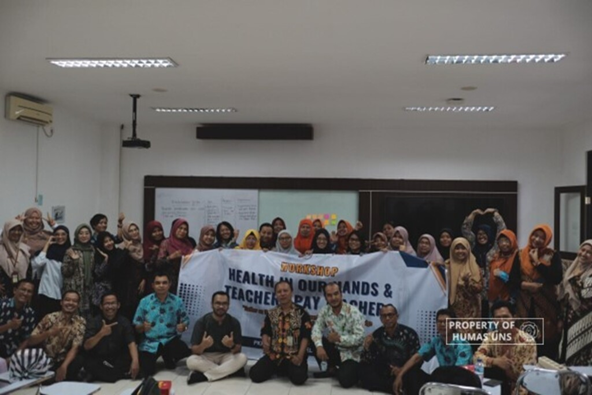
Universitas Sebelas Maret (UNS), through the Research Group Biology Education, collaborated with CREATE for STEM Institute, Michigan State University (USA), to organize the “Health in Our Hands (HiOH)” Learning Workshop as part of the International Community Service Grant (PKMI) managed by UNS’s Research and Community Service Institute (LPPM). This initiative supports SDG 3 – Good Health and Well-Being and SDG 4 – Quality Education, serving as evidence of global cooperation to improve health and well-being through science education.
The workshop was conducted in a hybrid format, comprising two sessions: 15–16 June 2024, online with 250 participants from various regions, and 16–18 July 2024, in-person at Building D, FKIP UNS, with 50 science and biology teachers from MGMP Surakarta. The program was designed to enhance teachers’ pedagogical skills in STEM-based learning that integrates health and genetics topics, including diabetes prevention.
The program demonstrates UNS leadership commitment, represented by the Chair of PKMI, Murni Ramli, S.P., M.Si., Ed.D., to promote innovation in health-focused science education. The workshop’s outputs include the development of HiOH teaching materials, the improvement of teachers’ Scientific Modelling and Argumentation Skills, and the ability to create digital teaching media for global distribution via the Teachers Pay Teachers platform. The expected outcomes are increased teacher competence in delivering science-based health education and the dissemination of effective educational practices to school communities, contributing to improved health and well-being among students.
For sustainability, UNS plans to continue the workshop regularly, expand participation to teachers from various regions, strengthen international networks, and further develop teaching materials and innovative learning practices. This global collaboration reinforces UNS’s role in building capacity in science education with a tangible impact on public health, while supporting sustainable educational transformation at both national and international levels.
UNS Hospital and Health Sector Collaborations
Sebelas Maret University (UNS) established the UNS Hospital (RS UNS) as an integrated center for education, research, and healthcare services. The hospital functions as a facility for medical and dental education, continuing professional development, and other multiprofessional health programs.
As a Type C hospital with a capacity of 208 beds, UNS Hospital serves as both a learning and service hub that emphasizes the synergy between science, technology, and humanity. Supported by highly qualified medical, paramedical, and administrative personnel, the hospital continuously innovates in delivering technology- and research-based healthcare services.
Source: https://rs.uns.ac.id/
In addition, through its Faculty of Medicine, UNS has established numerous collaborations with national and international institutions in the health sector, including
https://fk.uns.ac.id/index.php/tentang/detail/kerja-sama :
- PT Prodia Widyahusada Tbk – Partnership in health laboratory services and academic collaboration.
https://uns.ac.id/id/uns-update/fk-uns-jalin-kerja-sama-dengan-pt-prodia-widyahusada-tbk.html - Institute of Tropical Medicine (ITM) Antwerp – Collaboration under the Health Information, Training, and Improvement for Higher Education (HITIHE) Project.
https://prodikedokteran.fk.uns.ac.id/2023/berita/hitihe-project-telah-memasuki-tahap-diseminasi-dan-pelaporan-kegiatan/ - Dr. Moewardi Hospital – Cooperation in specialist and subspecialist medical education programs.
https://rsmoewardi.com/pradik-program-pendidikan-dokter-spesialis-pendidikan-dokter-subspesialis-ilmu-penyakit-dalam/ - Division of Virology, Faculty of Medicine, Tottori University (Japan) – HIV research collaboration (2021–2026).
- Umeå University (Sweden) – Joint research and academic exchange program (2023–2028).
- Kirby Institute, University of New South Wales (Australia) – Collaborative research and teaching initiatives (2023–2028).
Through these partnerships, UNS strengthens its role as a center for medical innovation, global collaboration, and community-oriented healthcare, aligning with the university’s vision to advance human well-being through education and research excellence.
Conclusion
Overall, UNS initiatives, ranging from local to national and global collaborations, demonstrate the university’s consistent commitment to improving health and well-being in society. Through this multi-level collaborative approach, UNS not only strengthens the capacity of communities, healthcare professionals, and teachers but also promotes evidence-based innovations that impact health and education systems on a broader scale. With sustainability plans that include program development, collaborative research, and the expansion of international networks, UNS reinforces its role as an active institution supporting the achievement of SDG 3 – Good Health and Well-Being in a sustainable manner.
In order to achieve the SDG 3 goal: “To ensure healthy lives and promote well-being for all at all ages,” in 2024, UNS provides funding for research and community service projects related to SDG 3. For example, several UNS researchers have conducted research and community service initiatives to address health-related issues, including:
- Dr. Yuliana Heri Suselo’s research on pharmacological and non-pharmacological approaches to address non-communicable diseases (anemia, obesity, and diabetes mellitus) titled “Pendekatan Farmakologi dan Non-Farmakologi untuk Mengatasi Penyakit Tidak Menular: Anemia, Obesitas, dan Diabetes Melitus” potentially involves collaboration with hospitals and local health institutions to implement interventions and gather clinical data.
- Dr. Evi Nurhayatun’s work to improve the health and quality of life of HIV patients in Surakarta, titled “Upaya Peningkatan Derajat Kesehatan dan Kualitas Hidup Penderita HIV di Surakarta,” is carried out in collaboration with local health institutions, including hospitals and clinics, ensuring comprehensive patient care and follow-up.
- Dono Indarto’s pilot study titled “Metabolic Profiles of Indonesian Adults with Obesity Based on Genetic Variations (Pilot Study)” on the metabolic profiles of Indonesian adults with obesity, based on genetic variations, is likely to engage collaborations with hospitals and research centers for participant recruitment and clinical assessments.
- Dr. Hendrastutik Apriningsih’s investigation titled “Investigasi Kontak Tuberkulosis dan Peningkatan Pengetahuan Mengenai Infeksi TB Laten di Puskesmas Gajahan” of TB contact tracing and knowledge enhancement regarding latent TB infections is conducted at Puskesmas Gajahan, representing direct collaboration with a local health institution.
- Prof. Dr. Hartono’s evaluation of the Kur-Co Smart program’s effect on dengue fever severity, titled “Pengaruh Kur-Co Smart terhadap Derajat Demam Berdarah Dengue,” is likely to be conducted in coordination with local health authorities and community health centers to monitor dengue cases and intervention outcomes.