SDG 1 In Number
Number of student 2024
27.604
Number of low income students receiving financial aid
20.353
1.3.5 Low Or Lower-Middle Income Countries Student Support
Low or Lower-Middle Income Countries Student Support
Universitas Sebelas Maret (UNS) is strongly committed to supporting access to higher education for students from developing nations, especially those categorized as low-income and lower-middle-income countries. This commitment is realized through participation in national programs as well as internal scholarship schemes provided by the university.
- Developing Countries Partnership Scholarship/Beasiswa Kemitraan Negara Berkembang (KNB)
UNS is one of the Indonesian universities trusted to host the Developing Countries Partnership Scholarship (Beasiswa Kemitraan Negara Berkembang – KNB) organized by the Government of Indonesia. Through this scheme, international students studying at UNS receive full financial support, including free tuition, living allowance, housing facilities, and academic assistance.
This scholarship scheme not only provides higher education access for students from resource-limited countries but also strengthens international collaboration and demonstrates UNS’s contribution to achieving inclusive and equitable education.
Over the past five years, UNS has consistently admitted students through the KNB Scholarship from various low-income and lower-middle-income countries across Asia, Africa, and other regions—such as Bangladesh, Botswana, Burundi, Ghana, Madagascar, Egypt, Pakistan, Rwanda, Sierra Leone, Sudan, Tanzania, Thailand, Timor-Leste, Turkmenistan, Uganda, Yemen, and Zimbabwe.
Table 1. KNB Scholarship Recipients at UNS (Past 5 Years)
Academic Year | Number of New KNB Students |
|---|---|
2021/2022 | 8 |
2022/2023 | 0 |
2023/2024 | 7 |
2024/2025 | 5 |
- UNS Scholarship
UNS also provides its own UNS Scholarship scheme dedicated to international students, including those from low-income and lower-middle-income countries. This initiative reflects the university’s commitment to promoting inclusive access and equal opportunity in higher education.
Table 2. Active UNS Scholarship Recipients from Low and Lower-Middle-Income Countries
|
No. |
Country of Origin |
Number of Active Students |
|
1 |
Afganistan |
2 |
|
2 |
Bangladesh |
3 |
|
3 |
Burundi |
1 |
|
4 |
Chad |
1 |
|
5 |
Egypt, Arab Rep. |
2 |
|
6 |
Ghana |
2 |
|
7 |
Guinea |
1 |
|
8 |
India |
2 |
|
9 |
Kenya |
1 |
|
10 |
Madagascar |
3 |
|
11 |
Morocco |
1 |
|
12 |
Myanmar |
6 |
|
13 |
Namibia |
1 |
|
14 |
Nigeria |
15 |
|
15 |
Pakistan |
5 |
|
16 |
Papua New Guinea |
4 |
|
17 |
Philippines |
1 |
|
18 |
Rwanda |
4 |
|
19 |
Sierra Leone |
1 |
|
20 |
Sudan |
6 |
|
21 |
Syrian Arab Republic |
4 |
|
22 |
Tanzania |
2 |
|
23 |
Thailand |
2 |
|
24 |
Timor-Leste |
59 |
|
25 |
Uganda |
1 |
|
26 |
Vietnam |
1 |
|
27 |
Yemen, Rep. |
11 |
|
28 |
Zimbabwe |
1 |
|
Total |
143 |
Through these two main schemes—the KNB Scholarship and the UNS Scholarship—Universitas Sebelas Maret directly contributes to global efforts to reduce inequality in access to higher education, in alignment with the university’s strong commitment to Sustainable Development Goal (SDG) 1: No Poverty.
Both scholarship programs illustrate UNS’s concrete support for students from low or lower-middle-income countries by providing free or subsidized education, financial aid, and full living support, ensuring that financial limitations do not hinder talented students from completing their studies and contributing to sustainable development in their home countries.
Additional Support for Students from Low or Lower-Middle-Income Countries
Postgraduate students from low or lower-middle-income countries receiving UNS Scholarships also receive research implementation support through the Doctoral Dissertation Grant (Hibah Disertasi Doktor), conducted in collaboration with academic supervisors from UNS.
In addition, these students are provided opportunities to enhance their research skills by participating in various research methodology lectures and training sessions delivered by UNS’s international partner institutions.
For example, the Faculty of Law at UNS organized a Visiting Professor and Legal Research Methodology Training Program, involving international experts, to strengthen the research capacity of international students, including those from low- and lower-middle-income countries.
Example: Faculty of Law UNS Visiting Professor and Research Methodology Training
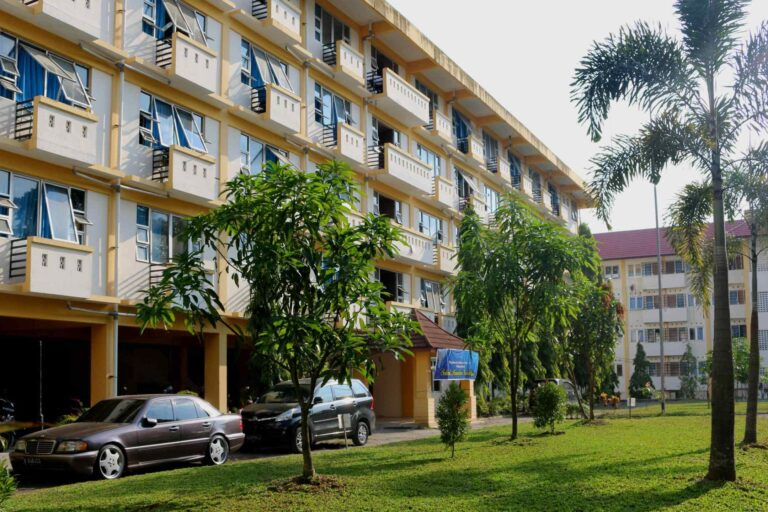
Moreover, international students from low and lower-middle-income countries are given priority access to UNS Student Dormitories, ensuring that they have comfortable and affordable accommodation throughout their study period.
UNS’s commitment to the Anti-Poverty Program (SDG 1), particularly through providing support for students from low-income families, is supported and strengthened by relevant empirical research conducted by UNS scholars. One such study is “Targeted scholarship for higher education and academic performance: Evidence from Indonesia” (Elsevier, 2021). This research represents the context of a lower-middle-income country in expanding access to higher education for poor students. By analyzing a national scholarship program launched in 2010, the study found that large-scale financial aid policies in Indonesia have significantly improved the academic outcomes of students from low-income backgrounds.
These findings are relevant to the indicator Low or lower-middle income countries student support, as they show that scholarship schemes in developing countries play a crucial role in strengthening higher education inclusivity and accelerating social mobility for poor groups. Moreover, this provides a valuable model for universities to design similar mechanisms in international contexts.