SDG 1 In Number
Number of student 2024
27.604
Number of low income students receiving financial aid
20.353
1.3.1 Bottom Financial Quintile Admission Target
Admission Target for Students from Low-Income Households
Universitas Sebelas Maret (UNS) consistently demonstrates its commitment to ensuring inclusive access to higher education for all members of society, including students from the bottom 20% of household income groups. UNS not only opens opportunities for students from middle- and upper-income families but also actively targets the admission of students from low-income backgrounds as part of its strategy to promote equitable access to higher education.
This affirmative policy is implemented through the Kartu Indonesia Pintar (KIP) Kuliah admission scheme, which covers approximately 25–26% of all new student admissions each year, even after UNS became a Legal Entity State University (PTN BH). The quota for KIP-Kuliah is officially regulated through a Rector’s Decree, which is publicly available on the UNS Information and Documentation Management website (PPID UNS). This transparency confirms the university’s continuous commitment to maintaining inclusivity in higher education.
In 2024, the number of low-income students receiving financial aid at UNS reached 20,353 out of 27,604 enrolled students, representing the university’s tangible achievement in realizing its bottom financial quintile admission target. This data illustrates that more than 70% of the student population benefits from financial assistance, ensuring that economic limitations do not hinder access to higher education.
Additionally, UNS provides financial support for community service programs, such as Kuliah Kerja Nyata (KKN), which is granted to all students in their 6th and 7th semesters. This initiative ensures that every student—regardless of financial status—can participate in mandatory community engagement activities without additional financial burden, reinforcing UNS’s inclusive and equitable approach to student development.
Furthermore, all UNS students receive subsidies for the National Health Insurance (BPJS Kesehatan), which guarantees access to healthcare services for every member of the university community. This comprehensive support aligns with UNS’s commitment to creating an equitable learning environment that upholds the well-being and academic success of students from all financial backgrounds, particularly those in the bottom financial quintile.
Additionally, UNS manages various scholarship programs through the Integrated Scholarship Information System (SIBEA), available at https://sibea.integrasi.uns.ac.id/. This online platform serves as a centralized portal for scholarship information, applications, and monitoring. It ensures that the targeting of students from low-income households is conducted in a structured, measurable, and sustainable manner. The existence of SIBEA proves that UNS’s efforts go beyond financial assistance—they establish a support system to guarantee the academic success of scholarship recipients.
- Financial Support Programs In 2024
- UPZ UNS Tuition Subsidy Scholarship
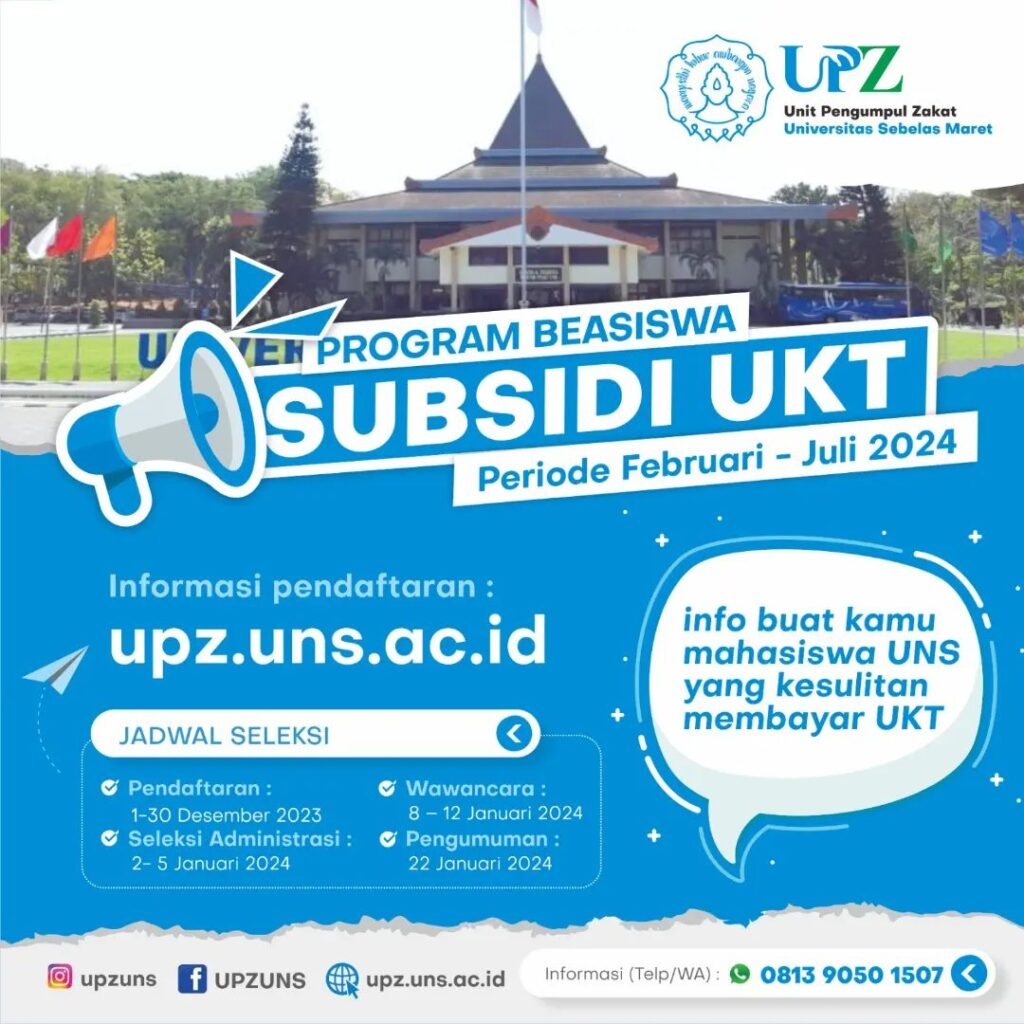
During the semester of February 2023–July 2024, UNS, through its Zakat Collection Unit (UPZ), implemented the UPZ UNS Tuition Subsidy Scholarship Program. The program was announced in late 2023, with the selection process held in January 2024. The financial aid was specifically aimed at students from low-income families, with required documents including a Certificate of Economic Hardship and photographs of the family residence.
This initiative reflects UNS’s strong commitment to ensuring inclusive access to higher education, particularly for students from low-income backgrounds.
- KIP Kuliah Scholarship
UNS also distributes the Kartu Indonesia Pintar (KIP) Kuliah Scholarship, funded by the government and implemented throughout the 2023/2024 and 2024/2025 academic years. This program provides full tuition exemption and monthly living allowances for verified recipients from low-income families. Through this program, UNS ensures that students from the bottom financial quintile can continue their studies without financial barriers.
Source : https://kip-kuliah.kemdiktisaintek.go.id/
- KIP Kuliah Scholarship
- “Bayan Peduli” Scholarship
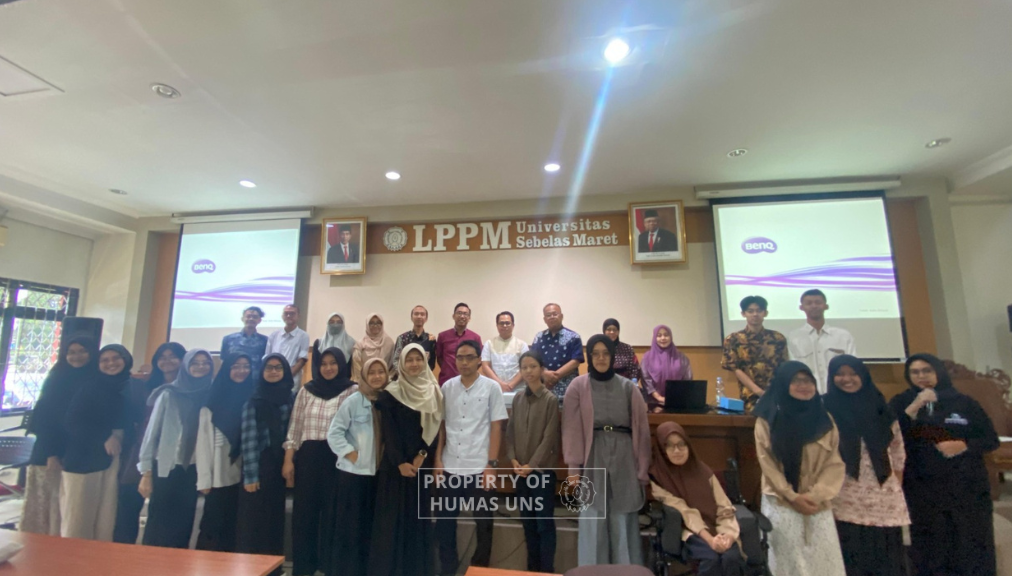
In October 2024, UNS, through the Center for Disability Studies (PSD) of the Institute for Research and Community Service (LPPM), collaborated with PT. Bayan Resources Tbk to launch the “Bayan Peduli” Scholarship. This program supports UNS students with disabilities who are also economically and socially vulnerable.
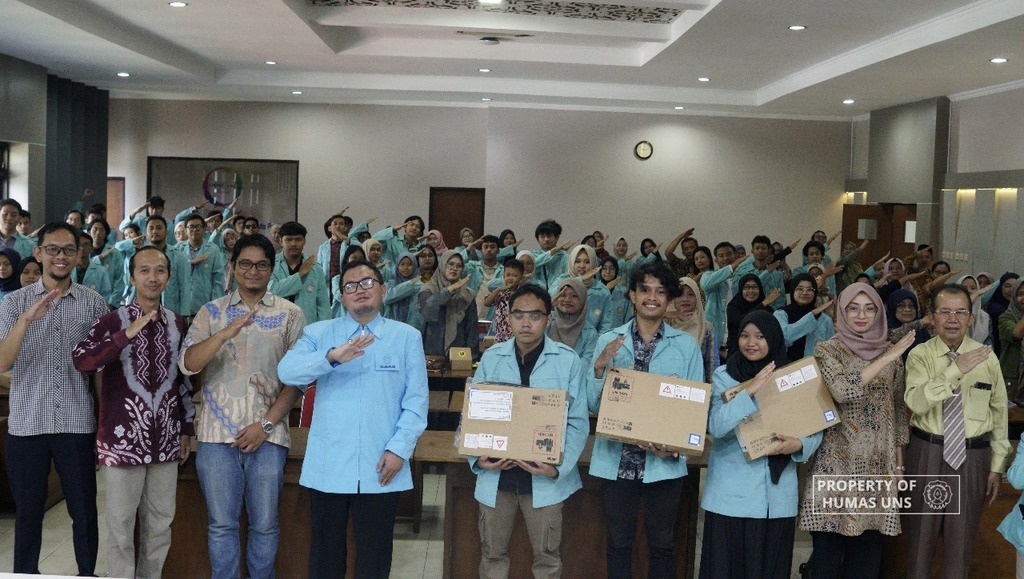
A total of 20 students with disabilities received laptops and full scholarships for eight semesters, covering tuition fees, living expenses, transportation, meals, as well as internship and final project support. This initiative not only ensures the continuation of their studies but also reinforces UNS’s commitment to providing equitable and inclusive access to higher education.
- “Be Smart” Scholarship 2024
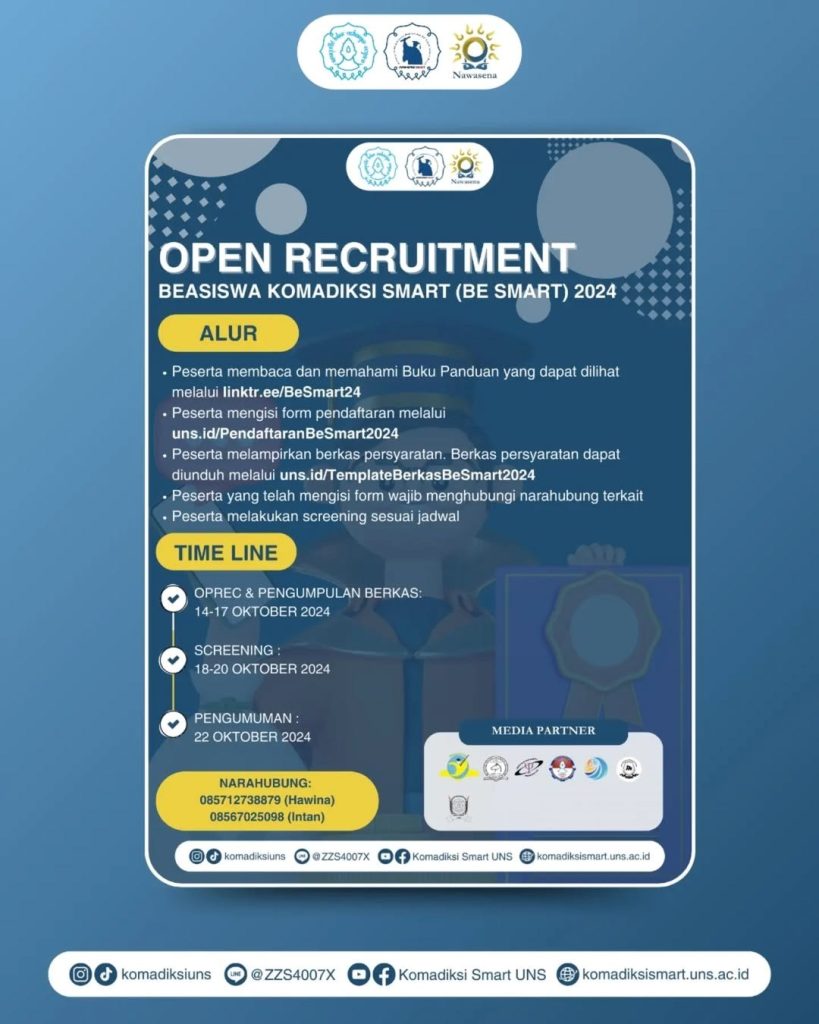
The Be Smart Scholarship is an initiative of the Komadiksi Smart UNS student organization, offering financial assistance to active undergraduate and diploma students in semesters 3–7. This program specifically targets students from low-income families, aiming to reduce their financial burden and encourage them to continue pursuing higher education despite economic challenges.
To be eligible, applicants must meet several requirements, including a minimum GPA of 3.25, proof of financial hardship, and not receiving scholarships from other institutions. The selection process includes online registration, document submission, screening, and an award ceremony.
In 2024, 10 students from various faculties and study programs received the Be Smart scholarship. The initiative serves not only as financial aid but also as recognition and motivation for high-achieving students facing economic difficulties.
Source :
https://drive.google.com/file/d/1gaRaAW3aBfgO_abIetQP7HDovYoMnYDj/view
https://www.instagram.com/komadiksiuns/p/DBDbEl4ymhF/?img_index=2
https://www.instagram.com/komadiksiuns/p/DBbPn6ryLRX/
-
- Tuition Fee Reduction from Faculties
Faculties at UNS also provide tuition fee reduction schemes. One example is from the Faculty of Economics and Business, which announced special tuition relief for students experiencing financial hardship. This initiative ensures that all students can continue their studies without financial disruption.
Source : Keringanan UKT bagi Mahasiswa Universitas Sebelas Maret Semester Agustus 2024
Through these various financial aid programs, Universitas Sebelas Maret continues to demonstrate its strong commitment to creating inclusive access to higher education and ensuring equal opportunities for students from low-income families. These policies serve as tangible evidence of UNS’s contribution to achieving Sustainable Development Goal (SDG) 1: No Poverty, as the university not only opens admission opportunities for students from the bottom financial quintile but also provides continuous support to help them successfully complete their studies.
UNS’s commitment to the Anti-Poverty Program (SDG 1), especially through setting a target to admit students from the bottom 20% of household income groups, is supported and strengthened by relevant empirical research conducted by UNS scholars. One such study is “Why are low-income eligible students reluctant to apply for financial aid? An empirical study from Central Java, Ind onesia” (Springer, 2024). This research highlights the reasons behind the low participation of students from low-income families in applying for financial aid to continue higher education. The study found that more than 70% of poor students have low academic expectations, mainly due to their self-perception of weak academic performance. Factors such as knowledge level, positive attitudes toward higher education, and environmental support were found to significantly influence students’ intentions to apply for scholarships.These findings provide empirical support for UNS’s policy focus on inclusive admissions for low-income students, highlighting that financial access must be complemented by initiatives to strengthen academic literacy and motivation among students from the lowest income groups