SDG 8 In Number
Number of employees
3.760
Number of academic staff
1.950
University expenditure (IDR)
1.850.122.866.706
Number of students
27.604
Number of students with work placements for more than a month
12.832
Number of employees on contracts of over 24 months
3.760
8.2.2 Employment Practice Union
Implementation of Employment Practice and Recognition of Unions at Universitas Sebelas Maret
As a higher education institution that upholds values of justice, equality, and inclusivity, Universitas Sebelas Maret (UNS) is fully committed to freedom of association and collective bargaining for all staff, including lecturers, educational staff, support staff, women, and international employees. UNS formally recognizes labor unions and professional organizations as legitimate channels for expressing aspirations, advocating rights, and fostering constructive dialogue between staff and management. The Rector of UNS has affirmed that from the beginning of his leadership, the university has considered the rights to freedom of association and labor organization as fundamental principles that must be respected.
This commitment aligns with national regulations, particularly Law No. 21 of 2000 concerning Labor/Trade Unions and Article 104 of Law No. 13 of 2003 concerning Manpower. Tangible outputs of this policy include programs that support the welfare of employees and their families, such as providing multi-faith places of worship, sexual violence prevention education seminars, and supporting lecturers’ participation in professional organizations. The outcomes achieved include enhanced safety, solidarity, and well-being among staff, as well as the creation of an inclusive and harmonious campus culture.
Moving forward, UNS is committed to sustaining these programs by strengthening the capacity of labor organizations, expanding social protection initiatives, and enhancing mechanisms to prevent discrimination and workplace violence. Through these measures, UNS positions itself as a campus that not only prioritizes academic excellence but also ensures that all its staff work in an environment that is fair, dignified, and supportive.
KPRI (Koperasi Pegawai Republik Indonesia) UNS

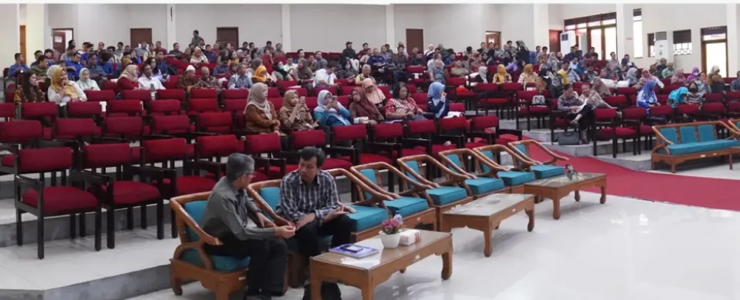
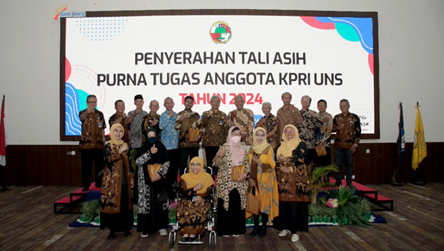
KPRI UNS is a staff cooperative that serves as a platform to meet the economic needs of its members through savings and loans, retail, and service businesses, while promoting their welfare and well-being. Membership is open to all members of the UNS community, including civil servants, permanent non-civil servant employees, and extraordinary members (retirees). KPRI thus functions as an open platform providing equal opportunities for all members to actively participate in cooperative activities. KPRI regularly organizes activities that encourage dialogue, participation, and inclusive welfare for members, including:
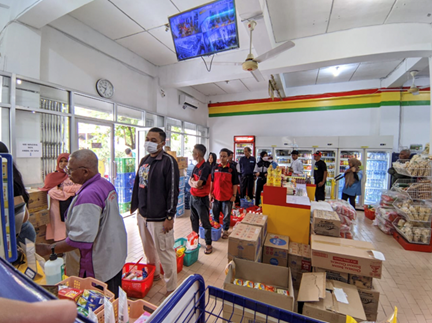
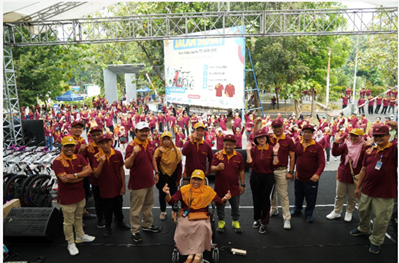
Sources:
https://www.instagram.com/p/DGm47zIvIOV/?utm_source=ig_web_copy_link&igsh=MXRsNDFtMG04aGRuYg==
https://kpriuns.com/home/berita_read/110.html
https://kpriuns.com/home/berita_read/109.html
https://kpriuns.com/home/berita_read/111.html
Dharma Wanita Persatuan (DWP) UNS

DWP UNS is a social organization consisting of wives of civil servants, female lecturers, and female educational staff at UNS. The organization serves as a platform to enhance members’ welfare, knowledge, and skills, develop mental and spiritual growth, contribute to social activities, and support government programs in national development. The activities organized by DWP demonstrate UNS’s commitment to inclusivity and to strengthening women’s participation in social welfare initiatives.
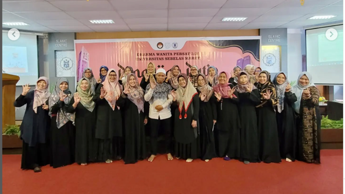
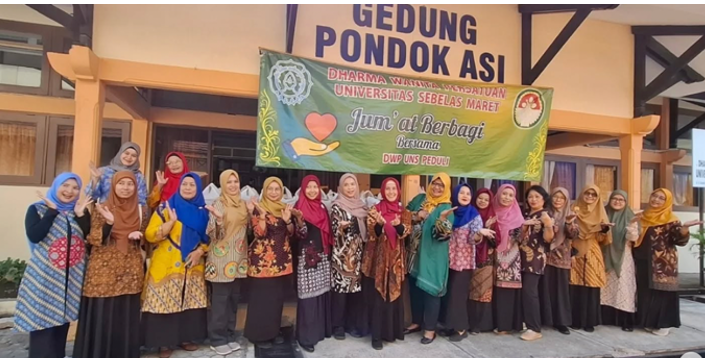
Examples of DWP activities in 2024 include:
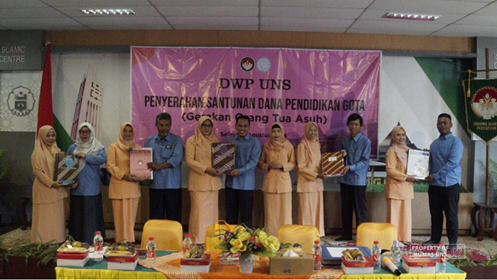
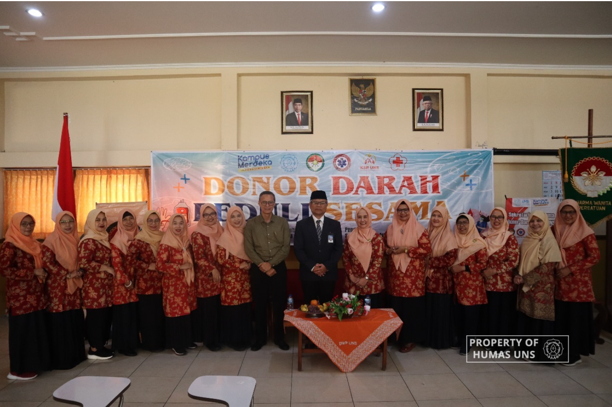
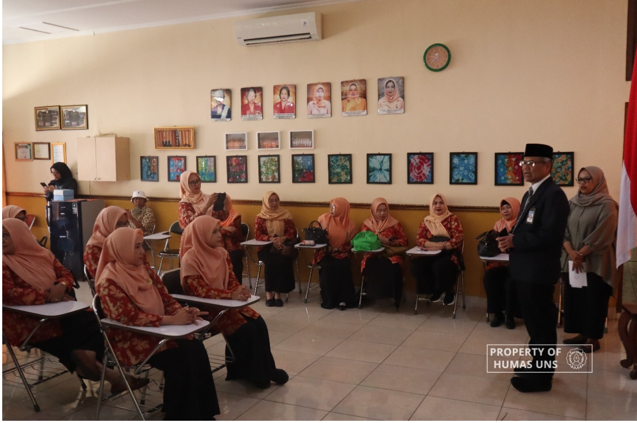
Regular blood donation drives every two months at each faculty and school at UNS
Source :
https://www.instagram.com/p/DBphWMiSzsk/?utm_source=ig_web_copy_link&igsh=MWY5enI0Zm84NDZlMA==
https://www.instagram.com/p/DBJEJTCvS8s/?utm_source=ig_web_copy_link&igsh=bDlydXEzdzV5MWl1
https://uns.ac.id/id/dwp-uns/dwp-uns-kembali-gelar-donor-darah-2.html
https://uns.ac.id/id/dwp-uns/dwp-uns-beri-santunan-dana-pendidikan-gerakan-orang-tua-asuh-kepada-173-anak.html
Professional Associations
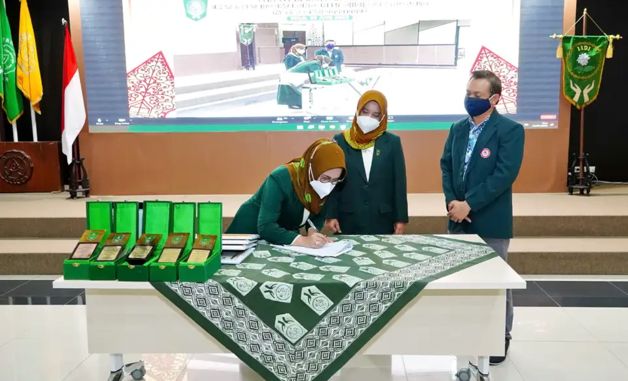
In addition to recognizing unions, UNS provides opportunities for lecturers and educational staff to participate actively in professional associations relevant to their fields, such as the Indonesian Engineers Association (PII), the Indonesian Doctors Association (IDI), the Indonesian Accountants Association (IAI), and other relevant professional organizations. This is in line with UNS’s commitment to uphold freedom of association, where lecturers, educational staff, and support staff are encouraged to express aspirations, enhance professionalism, and strengthen solidarity through legitimate organizations.
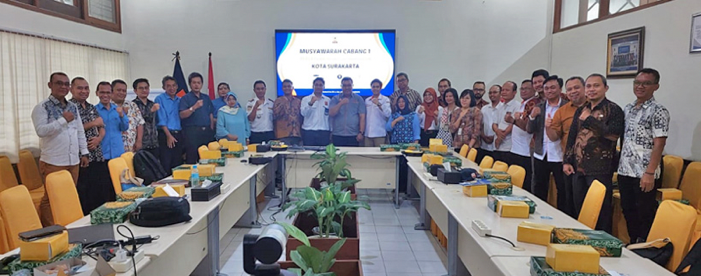
Examples include:
Source :
https://ft.uns.ac.id/berita-pengumuman/ketua-psppi-ft-uns-terpilih-sebagai-ketua-persatuan-insinyur-indonesia-cabang-surakarta
https://fk.uns.ac.id/index.php/berita/detail/649/pengesahan-kepengurusan-ikatan-istri-dokter-indonesia-iidi-cabang-solo-periode-2022-2025-bertempat-di-auditorium-fk-uns
Through KPRI, DWP, and participation in professional associations, UNS ensures that the rights to freedom of association and collective bargaining are implemented inclusively, fairly, and equally for all staff, including women and international employees.
Relevant Policies Supporting Freedom of Association and Collective Bargaining
Policy | Link | Summary | Relevant Articles |
Law No. 21 of 2000 on Labor/Trade Unions | https://peraturan.bpk.go.id/Details/44988/uu-no-21-tahun-2000 | This policy guarantees workers’ rights to freely form and join unions without discrimination. They also prohibit employers from obstructing union activities and recognize the role of unions in advocating for workers’ rights and engaging in collective bargaining. |
|
Law No. 13 of 2003 on Manpower | This policy defines the rights, obligations, and protections for both workers and employers in Indonesia. They emphasize equal employment opportunities without discrimination and cover provisions on wages, working hours, occupational safety, and protection for vulnerable groups. | Article 104: Labor/trade unions, federations, and confederations serve as platforms to advocate for workers’ rights and interests, including through collective bargaining | |
Law No. 39 of 1999 on Human Rights | https://www.komnasham.go.id/files/1475231474-uu-nomor-39-tahun-1999-tentang-%24H9FVDS.pdf | This policy ensures respect and protection of human rights in Indonesia, including the right to decent work without discrimination. It also provides special protections for women, children, and vulnerable groups, and establishes the National Human Rights Commission (Komnas HAM) as an independent institution for monitoring and enforcing human rights. | Article 23(2): Every individual has the right to form labor/trade unions to defend and protect their interests |
Within the framework of achieving SDG 8: Promote sustained, inclusive, and sustainable economic growth, full and productive employment, and decent work for all, in 2024, UNS provided research and community service funding on SDG 8 topics. For example, Rino Ardhian Nugroho, S.Sos., M.T.I., Ph.D., conducted a community service titled “Strengthening Literacy for the Welfare of Indonesian Workers in Taiwan through Synergy with PKBM PPI Taiwan,” which supports the recognition of workers’ rights and freedom of association, including for female and international workers.